Short Stories for Kids: 5 Original Tales to Read Aloud
Short stories for kids are the secret weapon of busy evenings. They can be incorporated into a bedtime routine, a car ride, or the five minutes of quiet before dinner. They still give children something to think about.
Five original short stories for kids, written to be read aloud in about two minutes each. Each story has a recommended age, a light theme, and a question to discuss afterward. You’ll also find tips on how to choose and read short stories and where to find more free short stories.
Why Short Stories for Kids Work So Well

A long book can feel like a mountain to a small child. A short story feels like a friendly hill. Children can follow the whole plot, meet the problem, and enjoy the ending before their attention wanders.
Short stories also help in other ways:
- They build a habit. A two-minute story every day beats a long book once a week.
- They grow vocabulary. New words appear in a context children can follow.
- They open conversations. A small story about a lost button can lead to a big talk about honesty.
- They suit every mood. Calm ones for bedtime, funny ones for the afternoon.
5 Original Short Stories for Kids to Read Aloud
1. The Little Cloud Who Was Afraid to Rain

Ages 3 to 5 · Theme: trying something new · Reading time: 2 minutes
High above a sleepy village floated a little cloud named Pebble. Pebble was soft and white and very, very shy.
All the other clouds loved to rain. They sprinkled and splashed and made rivers for the ducks. But Pebble held tight to every one of her drops. “What if I do it wrong?” she whispered. “What if I’m too small?”
Down below, the garden was thirsty. The flowers drooped. A girl named Tala looked up and sighed. “I wish it would rain.”
Pebble heard her. Her heart went thump, thump. She closed her eyes and let go of just one tiny drop.
Plip.
It landed on a sunflower’s nose. The sunflower giggled. “Did you feel that? Do it again!”
Plip, plip, plip. Pebble let go of a few more. Soon she was raining a gentle, silvery rain, and the whole garden sat up straight and smiled. Tala danced in the puddles. The ducks quacked hooray.
“I wasn’t too small at all,” said Pebble. “I was just the right size for a gentle rain.”
That night, she drifted off to sleep, empty and happy, ready to fill up again tomorrow.
Talk about it: What is something you’re a little afraid to try? What could be your first tiny drop?
2. Mira and the Lost Button
Ages 4 to 7 · Theme: honesty · Reading time: 2 minutes
Mira found a shiny red button on the classroom floor. It was perfect: round and glossy, with four tiny holes. She turned it over in her hand.
“Finders keepers,” she thought, and slipped it into her pocket.
All morning the button felt heavy, which was odd, because it weighed almost nothing.
At snack time, Mira noticed Mr. Ali’s coat hanging on his chair. The top button was missing. Mr. Ali kept checking his pockets. “Oh dear,” he murmured. “My grandmother sewed these on.”
Mira’s tummy twisted like a pretzel. She could stay quiet. Nobody would ever know. But the pocket felt heavier still.
She walked up slowly. “Mr. Ali, I found this. I should have told you sooner.” Her voice came out wobbly.
Mr. Ali’s face lit up. “Thank you, Mira. It takes courage to say that.”
That afternoon, Mira held the thread while he sewed the button back on. When she walked home, her pocket was empty, and her heart felt as light as a feather.
Talk about it: Why did the button feel heavy? Have you ever felt like that?
3. Pip and the Paper Boat

Ages 5 to 8 · Theme: not giving up · Reading time: 2 minutes
Pip the penguin wanted to build a paper boat that could sail across the whole pond.
His first boat folded the wrong way and looked more like a hat. His second sank the moment it touched the water. His third turned into a soggy lump.
Pip sat down on the bank and sighed. “Maybe boats just aren’t for me.”
Grandma Penguin waddled over and sat beside him. “Boats are like friends,” she said. “They take time to get to know.”
Pip looked at his soggy pile. Then he noticed something. The second boat had been too flat. The third had been too thin. Each mistake had taught him one new fold.
He picked up a fresh sheet. This time he pressed every crease sharp and straight.
The fourth boat wobbled, then floated. It bobbed past the lily pads, past the sleepy frog, and all the way to the far bank.
Pip waved at the little boat like it was an old friend. Then he turned to Grandma. “Shall we make a fleet?”
Talk about it: What did Pip learn from each boat that sank?
4. Owl’s Quiet Night
Ages 2 to 5 · Theme: calm and sleep · Reading time: 2 minutes
When the sun slipped behind the hills, Owl opened one big, round eye. It was time to say goodnight to the forest.
“Goodnight, Rabbit,” whispered Owl. Rabbit curled up in her burrow, warm and snug. Shh, the night is soft.
“Goodnight, Fox.” Fox tucked his nose under his tail and sighed. Shh, the night is soft.
“Goodnight, Hedgehog.” The hedgehog rolled into a small, prickly ball. Shh, the night is soft.
“Goodnight, little Mouse.” Mouse snuggled down in a nest of leaves. Shh, the night is soft.
The wind stopped blowing. The stars blinked slowly, one by one. Even the river hummed a sleepy tune.
Owl looked all around. Everyone was asleep. Everyone was safe.
Owl settled onto her branch and closed her big, round eyes. “Goodnight, forest,” she whispered. “Goodnight, you.”
Shh, the night is soft.
Talk about it: Which animal would you say goodnight to first? What can you hear at night?
5. Zane’s Very Big Sneeze
Ages 6 to 8 · Theme: laughter and kindness · Reading time: 2 minutes
Zane had a feeling in his nose. A tickly, twitchy, waiting-to-happen feeling.
He was standing in a field of dandelions on a school trip. “Oh no,” he whispered. “Not here. Not now.”
“Ah…” said Zane.
“Ah… ah…”
“AH-CHOOOOOO!”
It was the biggest sneeze in the history of sneezes. His hat flew off. His lunchbox spun in the air. And every single dandelion seed in the field lifted into the sky at once, floating up like a snowstorm in the sunshine.
The class went silent. Zane’s cheeks turned as red as tomatoes.
Then someone giggled. Then someone clapped. Then the whole class was cheering and spinning around under the fluffy white seeds.
“Do it again!” shouted Maya.
“I don’t think I can do that on purpose,” said Zane, laughing.
Their teacher smiled. “Well, that’s the most beautiful sneeze I’ve ever seen.”
On the way home, Zane wore his hat with a dandelion seed still stuck to the top, and he didn’t mind one bit.
Talk about it: How did the class turn an embarrassing moment into a happy one?
Short Stories for Kids by Age
| Age | What works best |
| 2 to 3 years | Very short, calm stories with repeated lines and animals |
| 4 to 5 years | Simple plots with a clear problem and a happy ending |
| 6 to 8 years | Funny stories, adventures, and stories with a little twist |
| 9 to 12 years | Longer short stories, mysteries, and fantasy |
Every child is different. If a story feels too easy, add questions. If it feels too hard, simplify as you read.
How to Read Short Stories for Kids Aloud
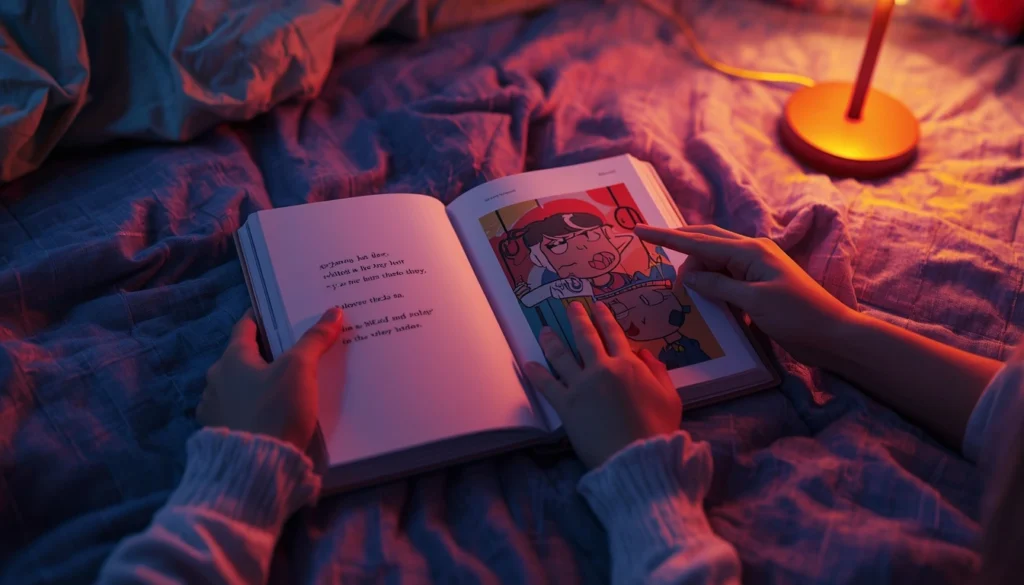
How you read matters as much as what you read.
- Use different voices. A tiny voice for the mouse and a deep one for the bear makes characters come alive.
- Slow down at the exciting parts. A pause before a surprise builds suspense.
- Let your child join in. Repeated lines, like “Shh, the night is soft,” are easy to learn and fun to say together.
- Ask questions after. “What would you have done?” helps children think about the story.
- Read it again. Children love repeats, and rereading builds vocabulary and confidence.
For more tips, see our read aloud tips for preschoolers, or the Reading Rockets guide to sharing family stories.
Where to Find More Short Stories for Kids
Once your child asks for “one more,” you’ll want a few more stories ready. Here are some ideas:
- Browse our free kids books library for colorful picture book stories, sorted by age.
- Read our guide to free children’s books online to find safe websites with free stories.
- For laughter, try our list of funny books for kids.
- To teach kindness through stories, see our books about kindness for kids.
- During the holidays, read our free Christmas stories for kids.
Turn Short Stories for Kids Into Writing Practice
Short stories are also a great starting point for writing. After reading, ask your child to:
- Draw their favorite scene
- Write a new ending
- Invent a new character and give them a problem
- Retell the story in three sentences
For more ideas, see our guide to creative writing for kids.
Final Thoughts
You don’t need a big book or a long evening to share a good story. A few minutes, a cozy spot, and a short story are enough to build a habit your child will remember for years.
Pick one of the stories above tonight, read it slowly, and ask that one question at the end. You might be surprised by what your child says.
Frequently Asked Questions
What are good short stories for kids?
Good short stories for kids have a simple plot, a clear problem, a happy or comforting ending, and characters children can relate to, such as animals or other children.
How long should short stories for kids be?
For young children, a story that takes one to three minutes to read aloud is a good length. Older children can enjoy stories of five to ten minutes.
What are the best short stories for kids at bedtime?
Calm stories with soft endings and repeated phrases work best. Choose gentle animals, quiet nights, and sleepy characters, and read them slowly.
Do short stories for kids need a moral?
Not always. Many children enjoy stories simply for fun. A gentle theme, such as honesty or kindness, can be a bonus if it comes naturally.
How can I get my child to enjoy short stories?
Let them choose the story, use funny voices, read at the same time every day, and keep sessions short and relaxed.
Where can I find free short stories for kids?
You can find free stories in our kids library, on trusted sites such as Unite for Literacy, in your local library, and in our own collection of original stories above.