How to Turn Screen Time into Story Time
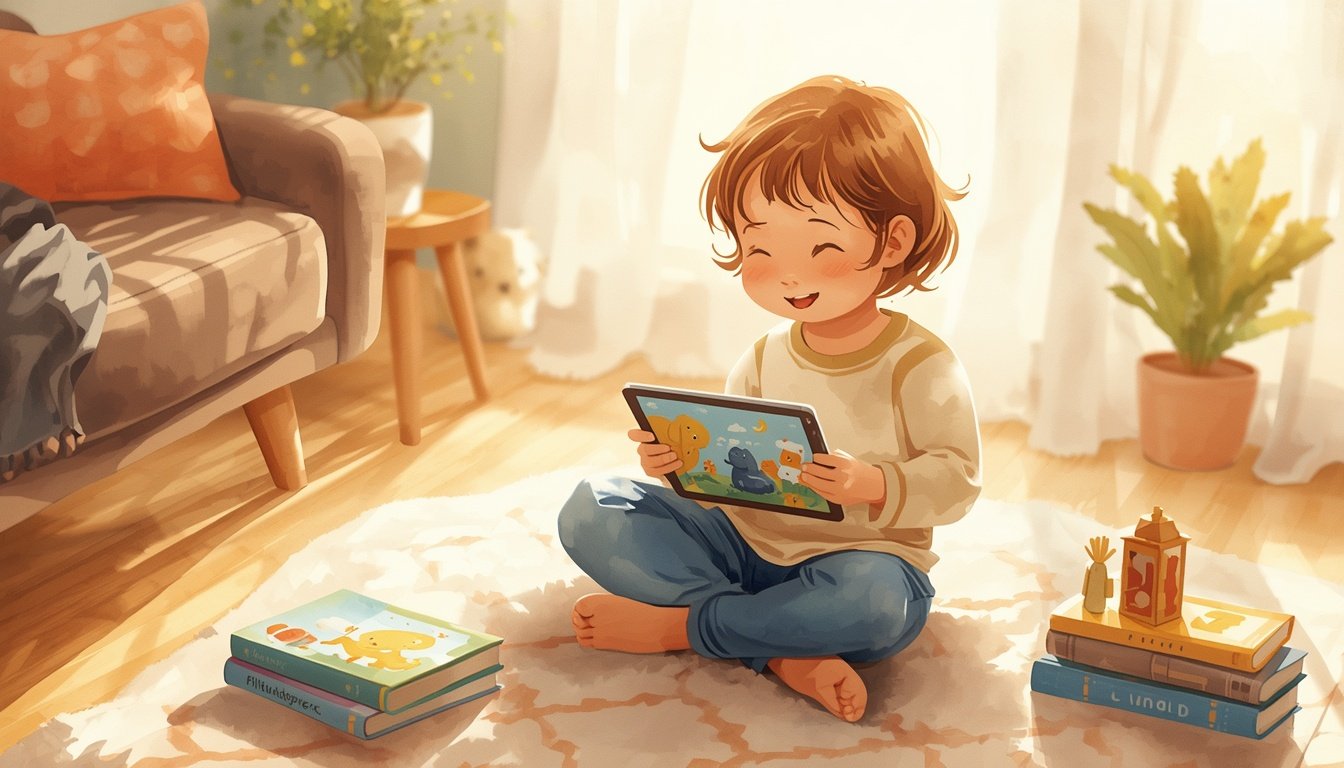
Even when screen time is otherwise mundane, digital storybooks for kids can give it meaning. Done that, seen that. It’s the end of a long day, and you are running on fumes, and handing your child a tablet gives you fifteen quiet minutes to actually get dinner made. There’s no blame there. But if you’ve ever wondered if that screen time could be doing a little more than just keeping your child occupied, here’s the good news: with the right approach, screen time and story time don’t have to be mutually exclusive.
Turning screen time into story time doesn’t mean abandoning screens. That is not realistic for most families, and it doesn’t have to be the goal. It’s about taking the time your child is already spending on a device and making it more intentional so that at least some of it is building language, imagination, and a love of stories instead of passive scrolling.
In this guide to digital storybooks for kids, you’ll find WHY the switch matters, WHAT makes a good digital story, a chart comparing story time with passive screen time, 7 free digital storybooks to start with, a simple 15-minute routine, steps to open our free books on any device, and a checklist for choosing quality stories.
Why This Shift Actually Matters
It’s easy to feel guilty about screen time, but guilt rarely changes behavior. What helps more is knowing why story-based screen time is worth choosing over other kinds of content.
- Not all screen time is created equal. Fast-cut content with constant scene changes and no real story gives young children very little back. Story-based content still offers many of the benefits of a printed book, such as new vocabulary, a sense of how stories are built, and the rhythm of language.
- It builds a bridge to independent reading. If your child isn’t ready to read alone, following along with a digital story, especially one with read-aloud narration or highlighted text, helps them learn how sentences work before they read books on their own.
- It can increase interest in physical books. Many children who love a story on a screen will ask for the same book in print. The screen becomes a doorway, not a replacement, especially when a parent connects the two.
- It gives tired parents a better option. On nights when you just aren’t up to reading aloud, a good digital storybook turns screen time into something to enjoy, not feel guilty about.
Experts such as the American Academy of Pediatrics encourage families to choose high-quality content and, when possible, to watch and talk about it together. You can find the latest guidance at HealthyChildren.org and ideas for reading aloud every day in this Reading Rockets guide to read aloud daily.
What Makes Digital Storybooks for Kids Actually Work
It isn’t enough to turn on children’s content and call it “story time.” A few things set a good digital storybook apart from passive screen time.
- A clear narrative. Look for a real beginning, middle, and end, not a loose string of songs or skits. A true story arc shows a child how stories work.
- Read-aloud narration with expression. A warm, lively narrator who mimics how a parent reads aloud, with pacing, emphasis, and tone, brings the words to life.
- Illustrations that support the story. The best digital picture books use art the way a printed book does to help you follow the plot, without flashy animations that pull attention away.
- Minimal interruptions. Constant pop-ups, games, and “tap here” prompts shift a child from listening and imagining to clicking and reacting. The calmer the format, the more it behaves like a real story.
- Age-appropriate pacing. Just as with printed books, stories should be shorter and simpler for toddlers and gradually longer and more detailed as children grow.
Good Story Time vs. Passive Screen Time
| Digital story time | Passive screen time | |
| Content | One story with a beginning, middle, and end | Endless clips or autoplay |
| Pace | Calm, with room to look and talk | Fast cuts and constant motion |
| Your role | Sit nearby, and ask questions. | Hand over the device. |
| Length | A few minutes, with a clear ending | Open-ended, hard to stop |
| What your child builds | Vocabulary, listening, and imagination | Mostly watching |
| What happens after | Talk about it, reread it, and find the book. | Often nothing |
7 Free Digital Storybooks for Kids to Start With
Every book below is a free PDF with no sign-up needed. You can read it on a phone, tablet, or computer, and it works well for story time.
1. Sleepy Sheep Say Goodnight
A little lamb says goodnight to all his farmyard friends, including the duck, cow, horse, hen, and dog, before curling up in his cozy bed of hay. A gentle, repetitive bedtime story for toddlers ages 1-3.
2. Good Night, Little Turtle
A lovable little turtle wishes his forest friends good night before drifting off to sleep. Each page brings a peaceful bedtime adventure for ages 2-5.
3. The Colors in My Day
Follow Juno from sunrise to bedtime in a free-color book for ages 1-3. Every page has one color and one clear picture to point at.
4. Bluebell the Little Truck
A small, determined truck rolls through a farm full of adorable animals in this heartwarming story about friendship, kindness, and teamwork.
5. The Feelings Monsters
Meet six colorful monster friends, each one a different emotion. A warm, playful picture book for ages 3-5 that helps little ones recognize their feelings.
6. The Shimmering Little Fish
A small fish feels unlike anyone else in the wide, blue ocean. This warm story for ages 2-6 reminds children that being different is what makes us special.
7. Birdie’s Wonderful Family
When her teacher asks her to tell the class about her family, Birdie doesn’t hesitate. A warm story for ages 4-6 that celebrates the messy, loud, loving shape of every family.
For even more choices, see our guides to free picture books online, the best books for 2 year olds and books for 3 year olds.
Practical Ways to Turn Screen Time into Story Time
Here is where the real shift happens with digital storybooks for kids: not in theory, but in your daily routine.
1. Swap One Screen Session a Day for a Digital Storybook
You don’t have to change your whole routine overnight. Choose one screen time slot, like right after lunch or a car ride, and swap whatever is normally playing for a free digital storybook. Small, steady changes add up more than one big change that doesn’t stick.
2. Sit With Them, Even Just Sometimes
Digital story time doesn’t mean handing over the device and walking away. Watching a story unfold with your child, even for a few minutes, makes it a shared experience and gives you natural chances to ask questions or point things out.
3. Ask Questions Afterward, the Same Way You Would With a Book
Treat a digital story like a bedtime book. Ask what happened, what your child’s favorite part was or what might happen if the story continued. This builds understanding and shows that the story matters.
4. Use It as a Bridge to the Printed Version
If your child loves a particular digital story, look for a printable or physical version. Reading the same story in both formats helps kids see screens and books as partners, not rivals. Our free PDFs can be printed for personal use at home.
5. Create a “Story Time” Ritual Around It
Give screen time a shape: story time happens at a certain time of day, for a certain length of time, in a comfortable spot, just like with a printed book. The ritual teaches children that this is a special kind of screen use.
6. Rotate in New Free Stories Regularly
A rotating collection of free digital storybooks keeps things fresh and exposes kids to a wider range of words, themes, and illustrations than replaying the same few videos.
A Simple 15-Minute Digital Story Time Routine
Use this plan on days when you have a little time to join in.
| Minutes | What to do |
| 0 to 2 | Pick a story together, and settle into a cozy spot. |
| 2 to 3 | Look at the cover, and ask, “What do you think will happen?” |
| 3 to 10 | Read or listen to the story, pausing to point at pictures. |
| 10 to 13 | Talk about it: “What was your favorite part?” |
| 13 to 15 | Turn off the screen, and act out a favorite moment or draw it. |
How to Open Our Free Storybooks on Any Device
Our books are free PDFs, so you can use them almost anywhere:
- Phone, tablet, or computer. Open the book’s page on our site, and tap Read Now or download the PDF. You don’t need an account.
- Fewer distractions. Turn on airplane mode after the PDF is downloaded, so no notifications pop up in the middle of a story.
- Kindle. Download the PDF, and send it with Amazon’s Send to Kindle service. Color pictures look best on a tablet or the free Kindle app.
- Print. Print a copy for personal use at home, and read the paper version together.
- Night mode. In the evening, lower the brightness and use a warm night mode.
For more on reading on a Kindle, see our guide to free adventure books on Kindle.
How to Choose Quality Digital Storybooks
Not everything labeled a “story” online is built like good digital storybooks for kids. Use this checklist:
| Look for | Watch out for |
| A real author or illustrator credit | No creator named anywhere |
| A consistent illustration style | A mix of clashing art styles |
| A calm pace and age-appropriate language | Fast cuts, shouting, and loud sounds |
| A short, complete story with a real ending | Stories that fizzle out or autoplay into something else |
| No sign-up needed to read | Ads, pop-ups, and upsells |
| A preview you can read first | Pages that ask for personal details |
A quick scan of the first few pages says a lot. Is the language right for your child’s age? Is the pacing calm? Does it feel like a real story and not a vehicle for ads?
Setting Reasonable Expectations
It’s worth saying plainly: this isn’t about reaching some perfect ratio of “good” versus “bad” screen time, and it’s certainly not about getting rid of screens. There are times when screen time is simply a way to get through the afternoon, and that is a perfectly legitimate use, too.
It isn’t about shaming parents. It’s about making story-based options easy to reach, so when you do turn to a screen, a story-rich choice is sitting right beside everything else. Small, repeated exposure to real stories adds up over time.
Frequently Asked Questions
Is digital story time as good as being read to in person?
Not really. Nothing beats a parent’s voice and closeness. But a good digital storybook is a big step up from generic screen content, and it’s a reasonable compromise when you can’t read aloud yourself.
How much digital story time is appropriate per day?
It depends on your child’s age and your family’s overall approach to screens. The American Academy of Pediatrics has suggested avoiding screens for the youngest children, apart from video chatting, and choosing high-quality content in limited amounts for preschoolers. Check HealthyChildren.org for the latest advice, and focus on making the screen time you already have more intentional.
My child gets bored of digital stories faster than physical books. Is that normal?
It can happen, especially without the feel of turning pages. Pairing digital and printed copies of favorite stories often helps bridge the gap.
What age is appropriate to start with digital storybooks?
There is no hard rule, but most experts recommend limiting screens for children under two. Digital storybooks become a more reasonable option as toddlers approach preschool age, always alongside plenty of hands-on reading.
Should I read digital storybooks for kids at bedtime?
Many pediatric experts suggest switching screens off about an hour before sleep. If you read a digital story in the evening, lower the brightness, use night mode and keep it short, or read the story earlier in the day and finish bedtime with a screen-free song or cuddle. For cozy ideas, see our guide to free bedtime stories for 3 year olds.
Where can I find screen-free ideas to go with story time?
Try acting out the story, drawing a favorite page or a short game after reading. Our guide to winter activities for toddlers has easy ideas that use things you already have at home.
Signs This Approach Is Working
You don’t need a formal check-in. A few small signs show up naturally. Your child asks to “watch the story” by name, instead of just asking for screen time. They repeat lines from a digital story while doing something else, a sign the language is sinking in. Or they ask you to read the printed version of a story they first saw on a screen, which is usually the best clue that the digital version worked as a bridge.
You don’t need to see any of these signs every day. Even occasional moments suggest that the shift from passive screen time to something more story-driven is taking hold.
Final Thoughts
Screen time doesn’t have to be the enemy of good reading habits. With a few small changes, one swapped session, a few questions afterward, and a rotating stack of free stories, digital storybooks for kids can become part of how your child builds a love of stories, instead of something that competes with it.
Begin small. Choose one screen slot this week, and replace it with a free digital storybook. Watch how your child responds. Do they lean in, ask questions, or want to watch it again? Build the habit one story at a time, whether the story is on a screen or on your lap.
Looking for free, beautifully illustrated stories to fill that screen time with something meaningful? Explore our entire Kids Library for picture books great for story time, any time.