The Best Free Courage Books for Kids
Courage usually doesn’t look the way we think it does. You don’t see capes and swords very often. For most kids, courage is walking into a new classroom for the first time, trying the slide they’ve been eyeing nervously for weeks, or speaking up when something doesn’t feel right. It’s small and everyday, and honestly, it’s one of the hardest things to teach a young child, because bravery almost always means doing something even when you are still feeling scared.
That’s where courage books belong on a kid’s shelf. It’s not just entertainment; it’s a quiet rehearsal room for kids to practice bravery, to see a character afraid and doing it anyway, long before they ever have to. And the best part—you don’t have to spend a thing to build a collection of these stories. There are a whole host of free courage books for kids that model bravery in a way that really resonates with little readers. Why they matter, what makes a good one, and where to find free options worth adding to your rotation.
Why Courage Books Matter More Than They Get Credit For
It’s easy to group courage books with general “be brave” messaging, but there’s genuine developmental value going on below the surface of the story.
They separate fear from failure. A lot of kids think if they are scared, there must be something wrong with them. A “brave” kid would not feel that way at all. Good Courage books quietly correct that notion, with characters who are truly afraid and act anyway. That fear isn’t the opposite of bravery, that distinction is part of it, which is one of the most useful things a young child can absorb early on. This idea, that fear and bravery can coexist, is something child psychologists at Zero to Three often highlight when discussing emotional resilience in young kids.
They offer a safe rehearsal. When kids see a character facing something scary, like a first day of school, a dark room, or a huge challenge, they get to practice being brave emotionally without any real stakes. That rehearsal is more important than people realize when that real moment comes.
They build emotional vocabulary. Stories of courage often give a name to the feeling—nervous, scared, worried—giving kids language for what they feel and experience, instead of just a vague, overwhelming feeling they can’t quite name.
They model recovery, not perfection. Just fearless characters don’t often make it into the best courage books. They show a character trying, sometimes failing or hesitating, and trying again and again. That’s a much more honest and much more useful version of bravery for a child to see.
They reach kids going through their own “brave moment.” Starting daycare, moving to a new bed, or struggling with a fear of the dark, there’s almost always a courage book that reflects exactly what a child is currently working through, which means the story lands in a much more personal way.
What Makes a Courage Book Actually Effective
Not every book with “brave” in the title lives up to it. Here’s what separates the free courage books for kids that genuinely help from the ones that just sound inspirational on the cover.
A character who’s actually scared. This sounds obvious, but it is the most important ingredient. If the hero shows no real fear, there’s nothing for a child to relate to. The fear has to look real before the bravery can mean anything.
A relatable, specific challenge. Vague bravery (“be brave!”) doesn’t stick nearly as well as a specific, recognizable fear, the first day somewhere new, a scary noise at night, or trying something in front of other people. Specificity is what makes a story feel personal rather than generic.
A gentle build, not a sudden fix. The best books about courage let the fear sit for a minute, rather than rushing straight to resolution. A character who takes a breath, hesitates, and then tries feels far more believable than one who simply “decides to be brave” and instantly succeeds.
Encouraging supporting characters. What really helps kids feel supported in real life is a parent, friend, or sibling who gives reassurance that doesn’t dismiss the fear (“it’s okay to feel nervous,” not “there’s nothing to be scared of”).
A warm, honest ending. Courage stories don’t require a perfect win. Often the most powerful ending is just the character trying, even if imperfectly, and feeling proud of themselves for it.
Free Courage Books for Kids, Sorted by the Fear They Address
Courage shows up differently depending on what a child is actually facing. Here’s a breakdown of free courage books for kids by common childhood fears, so you can match the right story to what your child is currently working through.
1. Starting Something New
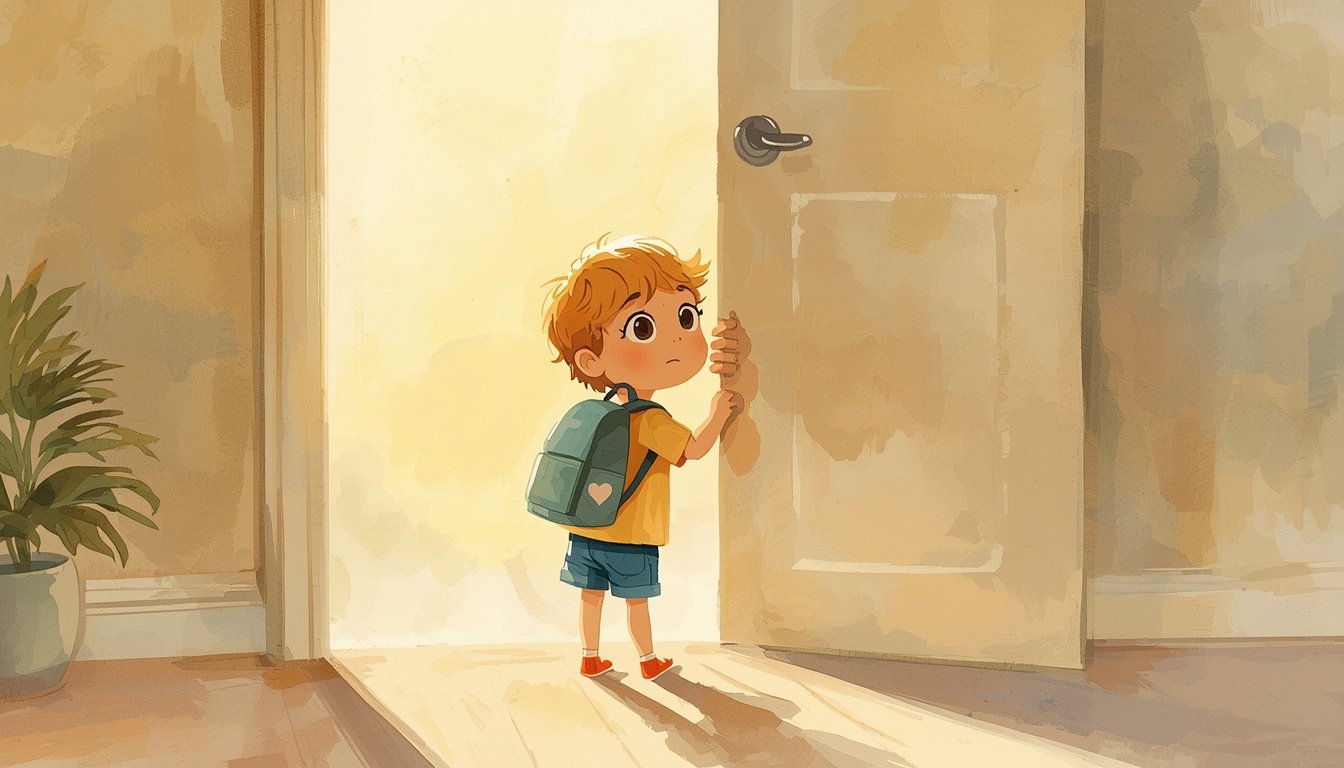
Some of the most universally useful courage stories you can find are those that follow a character going to school or daycare or a new activity for the first time. They tend to concentrate on the tangle of nerves before something unknown and the relief and pride that often follows—once it’s actually happening.
2. Separation and Goodbyes
Stories about goodbyes, whether it’s a parent dropping off a child or a character learning that goodbyes are not forever, help children deal with one of the most common early fears: separation from someone they trust.
3. Nighttime and the Dark
Some of the best-selling courage books deal directly with fears at bedtime, monsters under the bed, strange shadows, and sleeping without a nightlight. And these stories often work so well because they are read at the very moment the fear is likely to surface.
4. Trying Something Physically Challenging
“Books about a character trying something nerve-wracking physically, climbing high, riding a bike, or jumping into water, tap into a very concrete, visible kind of courage that many kids relate to immediately.”
5. Speaking Up or Standing Out
A little further along, these are stories about a character who finds the bravery to say something tough, ask for help, admit to a mistake, or defend himself or someone else. They are particularly useful for slightly older preschoolers who have more complex social scenarios.
6. Small Heroes Facing Big Moments
A familiar format, a beloved: an unlikely hero, a small animal, a small child, and in a moment of significance, finds unexpected courage. These stories are good because they are how a child might feel about the world—small but capable of doing something brave when it counts.
How to Choose the Right Courage Book for Your Child
If you relate the story to what your child is actually facing, it makes a real difference in how well it resonates. Matching the story to what your child is actually facing makes a real difference in how much free courage books for kids actually resonate.
If your child is anxious about an upcoming change such as starting school, a new sibling, or moving homes, look for stories that closely match that situation, as you can find them. The specificity If your child has a specific issue with fears at bedtime, select courage books that are meant to be read at night, with a calm, resolving tone and nothing too dramatic right before bed.
Gentler courage stories that allow the character to develop tend to land better than fast-paced, high-energy bravery tales if your child is naturally cautious or slow to warm up to new situations.
And if your kid is already pretty confident but has a specific fear that they’re struggling with, then a story that tackles that fear head-on is probably going to connect with them more than a generic ‘be brave’ story.
Tips for Reading Courage Books in a Way That Actually Helps
The book itself is only part of the equation when it comes to free courage books for kids. How you read it together shapes how much it actually sinks in.
Name the feeling out loud. Saying, “He looks pretty nervous here, huh?” in a low-pressure way helps your child to connect the character’s feeling with the concept of fear.
Avoid rushing past the scary part. It’s tempting to speed through that tense moment to get to the happy ending quicker, but sitting with that feeling for a beat is where a lot of the story’s value lives.
Connect it to something real, gently. If your child is going through something similar, then a passing comment like ‘That’s kind of like your first day at your new class, huh? ‘can open the door to conversation without turning story time into a lecture.
Celebrate the trying, not just the outcome. After the story, you can try to emphasize that the character was brave for trying while scared, not because it all worked out. That difference matters for how kids think about their own courage later.
Revisit favorites before similar real-life moments. When your kid is going through a big transition, reading a courage book that mirrors it a few days before can really help take some of the sting out of the actual event.
A Few Questions Parents Often Ask
Here are a few things parents often wonder about free courage books for kids.
My child seems more anxious after reading about a fear similar to their own. Should I avoid these books?
Not necessarily, a small amount of increased awareness right after reading is common and usually temporary. What matters more is the long-term pattern: over repeated readings, most kids start absorbing the coping and reassurance modeled in the story rather than fixating on the fear itself. If anxiety feels persistent or intense, it’s worth mentioning to your child’s pediatrician.
Are courage books only useful right before a scary event, or should we read them anytime?
Not necessarily, it’s common to have a little bump in awareness immediately after reading, but it’s generally short-term. The important thing is the long-term trend: through multiple readings, most kids start to internalize the coping and reassurance that the story models, rather than getting stuck on the fear itself. If anxiety is persistent or severe, consider talking to your child’s pediatrician.
What if my child doesn’t seem scared of anything the book addresses?
Both are worth it. Reading proactively can prepare kids mentally for a known transition. Even if you read them as general rotation, not tied to any particular upcoming event, it still reinforces the broader idea that fear and bravery can coexist, which is useful all on its own.
Where to Find Free Courage Books for Kids
This is often the sticking point for a lot of parents. Finding well-written books that really speak to kids—not the preachy or generic kind—is hard to come by, and those that tackle particular fears usually aren’t cheap. That’s exactly where a good library of free courage books for kids makes the biggest difference.
That’s the gap a free digital library is there to fill. With an ever-growing library of free, well-illustrated picture books, you can find a courage story for just about any particular fear your child is experiencing without spending money, without searching for a long time, and without compromising on something that doesn’t quite fit. Whether it’s the first day of school, the fear of the dark or a big physical challenge, being prepared with free choices means you’re never stuck without the right story at the right time.
Final Thoughts
Courage books do something quietly powerful. They continually teach kids that bravery has nothing to do with not being afraid. It was always about the trying, anyway. That message tends to have so much more impact when it comes from a beloved character rather than from a well-meaning parent saying “just be brave” in the moment. That’s really the quiet power behind free courage books for kids.
This week get one courage book for free, preferably one that reflects something your child is going through right now. See how they respond. Do they ask questions? Do they go quiet? Do they want to reread it immediately? Let that guide, which is fear, tackle next. And eventually, you may find your child picking up these stories for themselves, right before the moments that really need a little bit of bravery.
Looking for more free, encouraging stories for your child? Browse our full Kids Library for beautifully illustrated picture books perfect for building confidence, one story at a time.