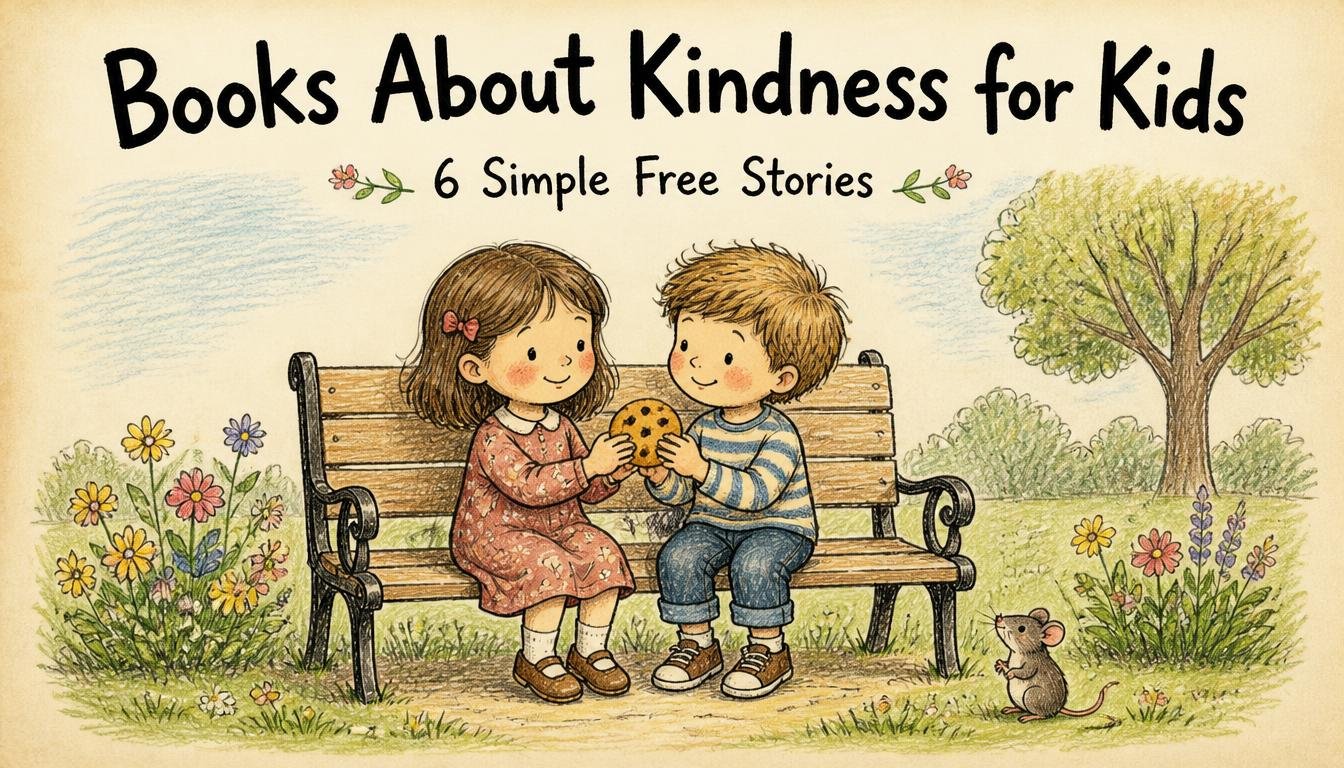
Books About Kindness for Kids: 6 Simple Free Stories
Books on kindness for kids do something a lecture can never do: They show kids kindness in action. They see a character share a cookie, feel different from everyone else, say goodnight to a friend, and begin to understand why it matters instead of hearing “be nice.” “That’s a lesson they remember long after the final page.
In this guide to kindness books for kids, you will learn why kindness stories are so powerful, what to look for in a good one, six free picture books from our library, and easy ways to talk about kindness after story time.
Why Kindness Stories Work So Well for Young Children
Young children learn through modeling and doing, and stories provide a safe place to practice. That’s why books about kindness for kids can be so powerful.
- They show instead of tell. Seeing a character choose to share or help is far more powerful than hearing a rule.
- They build empathy. When a child feels sorry for a lonely fish or happy for a friend, they are practicing how to care about others.
- They give kids the words. Stories teach phrases like “Would you like some?” and “Are you okay?” that children can use in real life.
- They create a safe space for big ideas. Reading together lets children explore compassion, empathy, and forgiveness without any pressure.
- They start conversations. One short story can open a talk about what happened at the playground today.
Researchers and parenting experts agree that stories are just part of the story. According to Michigan State University Extension, the best way to teach young children to be kind is to model kindness yourself. Talking about kindness and doing kind acts together also help. Learn their simple tips on how to teach your young child kindness.
What Makes Great Books About Kindness for Kids
Not every story with a “nice” character teaches kindness well. When you’re choosing books about kindness for kids, look for these:
- Kind actions, not just kind words. The best stories let children see what kindness looks like in a real moment.
- Situations kids recognize. Sharing a treat, feeling different, or saying goodnight makes the lesson feel personal.
- Characters children care about. A lovable fish, mouse, or turtle makes it easy to feel what the character feels.
- A gentle ending that isn’t preachy. The best stories trust children to notice the lesson on their own.
- Warm, friendly illustrations. Soft colors and kind faces set a caring mood.
6 Simple Free Books About Kindness for Kids
Here are six free picture books from our library that bring kindness to life. Each one looks at kindness from a different angle, so you can pick the one that fits your child’s day.
1. The Mouse and the Cookie: A Story About Sharing
A little mouse finds a delicious cookie and has to decide what to do when a friend comes along, hungry. It’s a sweet way to show young children that sharing is a choice and a gift. After reading, ask, “What would you do?”
2. The Shimmering Little Fish: A Story About Being Different
A small fish feels unlike anyone else in the wide, blue ocean. This warm story for ages 2-6 reminds children that being different is what makes us special and shows how kindness and friendship can make everyone feel they belong.
3. The Little Mouse and the Gentle Giant: A Story About Friendship
This story about friendship and kindness pairs a little mouse with a gentle giant. After reading, ask your child how each character was kind to the other and how it made the other feel. For more ideas on helping little ones connect, see our guide to making friends at school.
4. How the Crayons Saved the Rainbow: Kindness as Teamwork
When the rainbow starts to fade, the crayons team up to bring the colors back. It’s a bright story about helping each other and working together, which is a big part of being kind. Made for ages 2-6.
5. Good Night, Little Turtle: Kind Words at Bedtime
A lovable little turtle says goodnight to each of his forest friends in this cozy bedtime story for ages 2-5. Saying a kind word to everyone you care about is a simple, gentle way to end the day.
Read Good Night, Little Turtle free.
6. I Love You to the Moon and Back: Kindness Starts With Love
A warm moment between a parent bear and their little cub shows children what it feels like to be loved and secure. Feeling cared for is where caring for others begins.
Read I Love You to the Moon and Back free.
How to Talk About Kindness After Reading
A few quiet questions turn a short story into a lasting lesson. After you read books about kindness for kids, try asking:
- What did the character do that was kind?
- How do you think it made them feel?
- Have you ever felt like that character?
- What could you do to be kind to someone today?
- How did the story make you feel?
Let your child answer in their own words, and resist the urge to explain the lesson for them. The first 5 California suggests talking about examples of kindness from the story and asking how certain actions would make your child feel, which you can read more about in their tips on making kindness a daily habit. If your child’s feelings feel big after a story, our guide to choosing an emotions book for kids can help too.
Easy Kindness Activities to Try at Home
Stories stick best when kids get to live them. These simple ideas go well with free books about kindness for kids:
- Make a kind words jar. Drop in a note each time someone says or does something kind.
- Draw a card. Make a card for a grandparent, neighbor, or friend.
- Share a snack. Let your child offer something to a sibling or guest.
- Point out kindness. When you notice your child being kind, say so. Acknowledging kind behavior helps them continue.
- Donate a book. Choose a used book to share with a Little Free Library.
Kindness at Every Age
Kindness looks a little different as children grow. The first 5 California shares a helpful guide:
- Babies and toddlers (ages 0-2): Even the youngest children can start learning about kindness by watching you.
- Preschoolers (ages 3-5): Kids can understand the idea of kindness at a basic level and take part in kind acts.
- Kindergarten and early elementary (ages 5 and up): Children can take on more complex acts of kindness.
Short, simple stories with warm pictures suit the youngest readers, while older children enjoy talking about why a character made a kind choice.
Frequently Asked Questions
At what age can children start learning about kindness?
Even babies and toddlers begin learning by watching how you treat others. Preschoolers can understand the idea of kindness and join in with simple kind acts, and reading stories together is a gentle way to start.
How do I choose books about kindness for kids?
Look for stories that show kind actions in everyday situations, with characters your child will care about and a gentle, non-preachy ending. Pick books that match your child’s age and attention span.
Are these books really free?
Yes. Every book in our library is a free PDF with no sign-up needed.
Should I explain the lesson after the story?
It works better to ask questions than to explain. When children think about the story and answer in their own words, the lesson sticks.
What if my child is unkind to a sibling sometimes?
That is very normal at this age. Stay calm, show your child what kind words sound like and keep reading stories about kindness together. Children learn by seeing the behavior over and over.
Final Thoughts
Books about kindness for kids give children something that rules can’t: a story to feel. A mouse who shares, a fish who finds friends, and a turtle who says goodnight can all plant small seeds of empathy that grow into everyday habits.
Start with one story this week. Read it together, ask one gentle question, and notice the small kind things your child does next. Looking for more free books about kindness for kids and other warm picture books? Browse our full Kids Library for stories your child will love.