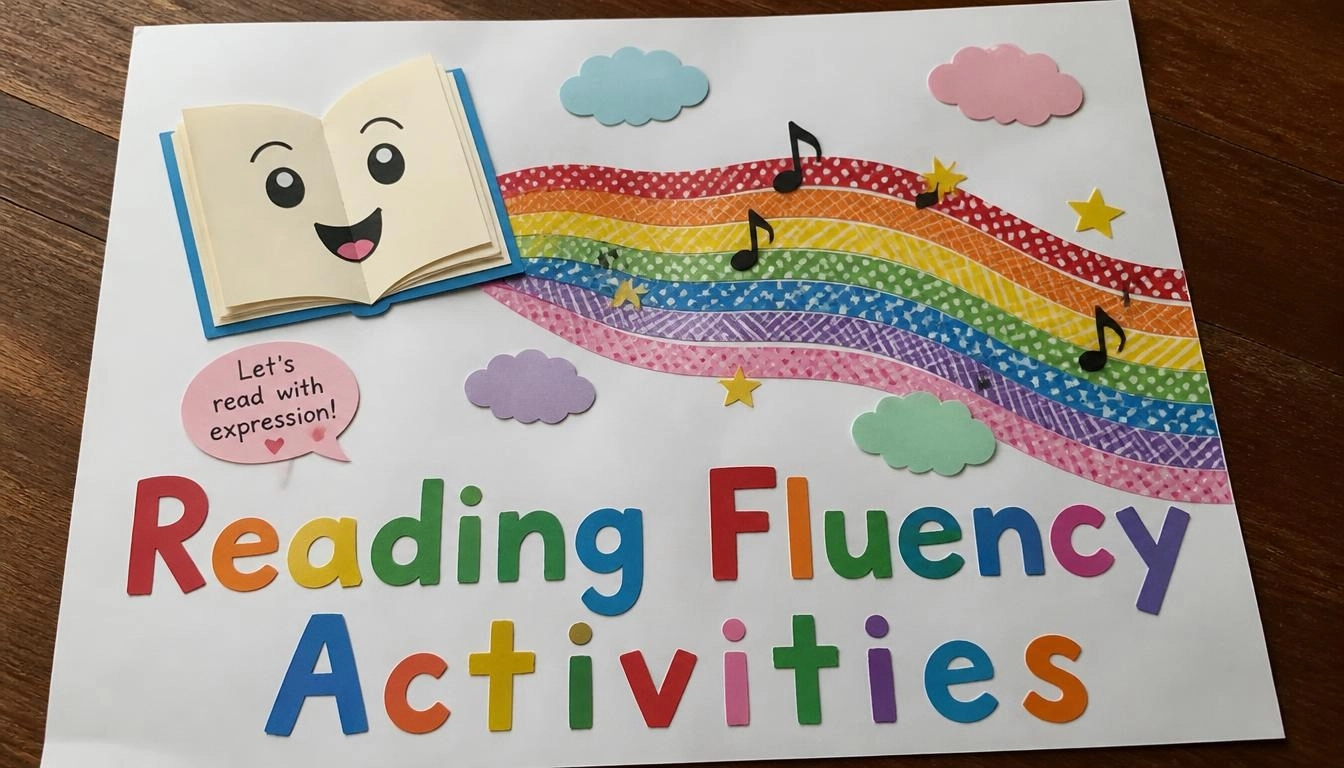
Reading Fluency Activities: 10 Easy, Fun Ways to Practice
Every parent knows the sound of early reading: slow, careful, one word at a time. “The… cat… sat… on… the… mat.” It’s wonderful, and it’s also a little bumpy. Over time, children want that bumpy road to turn into a smooth one, where words flow like talking.
That smooth, natural reading is called fluency, and it grows with practice. The good news is that you don’t need worksheets or special programs. In this guide, you’ll find 10 easy reading fluency activities you can do at home in just a few minutes a day, plus tips for choosing the right books and avoiding common mistakes.
What Is Reading Fluency?
Reading fluency means reading a text accurately, at a comfortable speed, and with natural expression. A fluent reader doesn’t stop to sound out every word, and their voice rises and falls like speech.
Fluency isn’t about speed reading. It’s about reading smoothly enough that your child can focus on what the story means. That’s why fluency is often described as a bridge between sounding out words and understanding them.
Why Reading Fluency Matters
When children read word by word, much of their mental energy goes into decoding. Fluent readers have that energy free for the story itself. Many parents notice that when fluency grows, so does enjoyment. Books become less of a chore and more of an adventure.
Fluency also supports other skills. If you’re working on understanding stories, see our guide on how to improve reading comprehension for kids.
Signs Your Child May Need Fluency Practice
Every child learns at their own pace, but you may want to add reading fluency activities if your child:
- Reads very slowly and sounds out most words
- Reads in a flat, robotic voice
- Ignores punctuation, like commas and full stops
- Loses their place often
- Seems tired or frustrated after a short time
These are all common, especially in beginning readers. Be patient, since new readers often read slowly.
Start With the Right Book
The best practice book is one your child can mostly read on their own. If a text is too hard, they’ll spend all their energy on words and won’t have a chance to work on fluency.
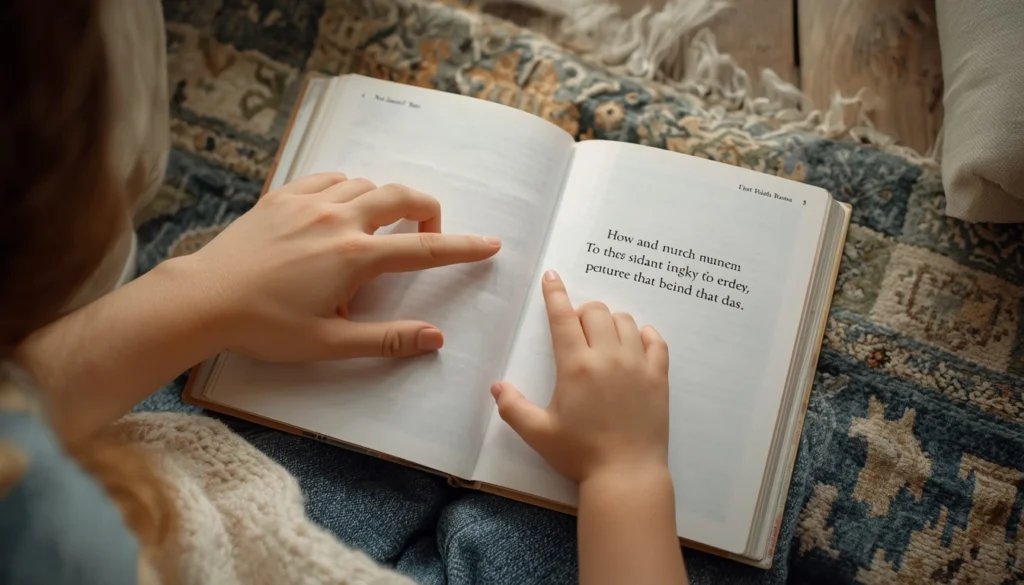
A simple guide is the five-finger test. Open a page and ask your child to read it. Each time they can’t read a word, put up a finger. If you run out of fingers on one page, the book is probably too hard for now. Save it for reading aloud together.
Short books with repeated phrases and rhymes are ideal. You’ll find many in our free kids books library.
10 Reading Fluency Activities to Try at Home
1. Repeated Reading
Choose a short passage or one page of a favorite book. Have your child read it aloud three or four times. Each time, ask them to read a little more smoothly. Celebrate the improvement, like “Wow, did you hear how smooth that was?” Rereading is one of the most reliable ways to build fluency.
2. Echo Reading
You read a sentence aloud with good expression and pace. Your child then repeats it, copying your voice. Start with short sentences and make it playful. It’s especially helpful for children who read in a flat voice.
3. Choral Reading
Read the same text together at the same time, matching your pace. As your child gains confidence, gradually let your voice fade so they carry on alone. Books with repeating lines are perfect for this.
4. Partner Reading
Take turns reading page by page. You model smooth reading, and then your child has a turn. It’s relaxed, and children enjoy being part of the story.
5. Reader’s Theater

You don’t need costumes or a script. Choose a picture book with plenty of dialogue and assign parts. Your child reads one character, and you read another. Because they want to perform well, children happily reread the story several times.
6. Poems and Rhymes
Poetry is a wonderful way to build fluency. Poems are short, rhythmic, and full of fun. Take turns reading funny poems aloud, such as those by Shel Silverstein or Jack Prelutsky. The rhythm helps your child feel how smooth reading should sound.
7. Play With Voices
Let your child read in a silly voice: a tiny mouse, a booming giant, or a robot. Using different voices encourages expression, and children forget they’re practicing. Our fairy tales for kids are great for this.
8. Record and Review

Use a phone or voice recorder app so your child can record their reading. Then listen back together. Focus on just one thing, like “Let’s make this part a bit smoother.” Children love hearing themselves, and it makes practice feel like a project.
9. Read to a Toy, Pet, or Younger Sibling

Reading to someone else is a confidence booster. A stuffed toy never corrects mistakes, and a younger sibling gives an older child a chance to shine. Many children read more carefully when they have an audience.
10. Listen While Following Along
Choose an audiobook or a recorded read aloud and let your child follow the text with their finger. They hear what fluent reading sounds like while seeing the words. It’s a gentle way to practice, especially for children who feel nervous reading aloud.
A 10-Minute Reading Fluency Routine
Short, regular sessions work best. Here’s a simple pattern you can repeat three or four times a week:
| Minutes | Activity |
| 2 | Warm up with a poem or a rhyme. |
| 4 | Repeated reading of a short passage |
| 2 | Echo or partner reading |
| 2 | Cheer, and read something just for fun. |
Even five minutes a few days a week can make a difference. Keep it light, and stop while your child is still enjoying it.
Sight Words and Fluency
Many common words in early books don’t follow the usual sounding-out rules, such as “the,” “said,” and “was.” When children recognize these words instantly, reading becomes much smoother. If your child struggles with them, our guide to sight words for kids has 10 fun games to practice.
Reading Fluency Activities by Age
| Age | What to focus on |
| 4 to 5 years | Read aloud, nursery rhymes, and echo games. Don’t push independent reading |
| 6 to 7 years | Repeated reading, partner reading, and short poems |
| 8 to 10 years | Reader’s theater, recording, and longer passages |
Some of these activities may not suit your child until they’re a bit older. That’s perfectly fine.
Common Mistakes to Avoid
- Turning it into a speed race. Fluency is smooth reading, not fast reading.
- Choosing books that are too hard. Struggling kills confidence.
- Correcting every mistake. Wait a moment, then offer help if your child gets stuck.
- Practicing for too long. Short sessions work better than long ones.
- Forgetting praise. Notice the effort and the improvement.
- Comparing children. Every reader progresses at their own pace.
When to Ask for Extra Help
If your child reads very slowly and with great effort even after regular, relaxed practice over several months, talk to their teacher. Some children benefit from extra support, and early help makes a big difference.
For more parent-friendly guides, see fluency activities for kindergarteners from Reading Rockets.
Where to Find Good Practice Texts
You don’t need to buy anything. Try these:
- Our free kids books library has short picture books for every age.
- Our short stories for kids are perfect for repeated reading, since each takes only a couple of minutes.
- Our moral stories for kids have dialogue that’s great for reader’s theater.
- For more free options, see our guide to free children’s books online.
- And don’t forget to read aloud together daily. Our read aloud tips for preschoolers can help.
Final Thoughts
The best reading fluency activities are short, playful, and pressure-free. Choose one or two from this list, try them for a few minutes a day, and notice the small wins, like a smoother sentence or a funny voice. Fluency grows quietly, one page at a time.
Remember that your encouragement matters more than perfect technique. When reading feels fun, children want to do it again.
Frequently Asked Questions
What are reading fluency activities?
They’re simple practice games that help children read smoothly, at a good pace, and with expression. Examples include repeated reading, echo reading, choral reading, and reader’s theater.
How can I improve my child’s reading fluency at home?
Choose books your child can mostly read, reread favorite short texts, take turns reading, and keep sessions short and enjoyable. Reading poems and playing with voices also helps.
How long should we practice reading fluency each day?
Five to ten minutes is plenty for most children. Short, regular sessions are more effective than long, occasional ones.
Is reading fluency the same as reading fast?
No. Fluency means reading accurately, smoothly, and with expression. Speed is only one part, and pushing a child to read faster can backfire.
What are the best books for fluency practice?
Short books with repeating phrases, rhymes, and plenty of dialogue are ideal. The book should be easy enough that your child can read most words on their own.
How is reading fluency related to comprehension?
When children read fluently, they don’t have to focus on each word, so they can think about what the story means. Fluency is often called a bridge to comprehension.