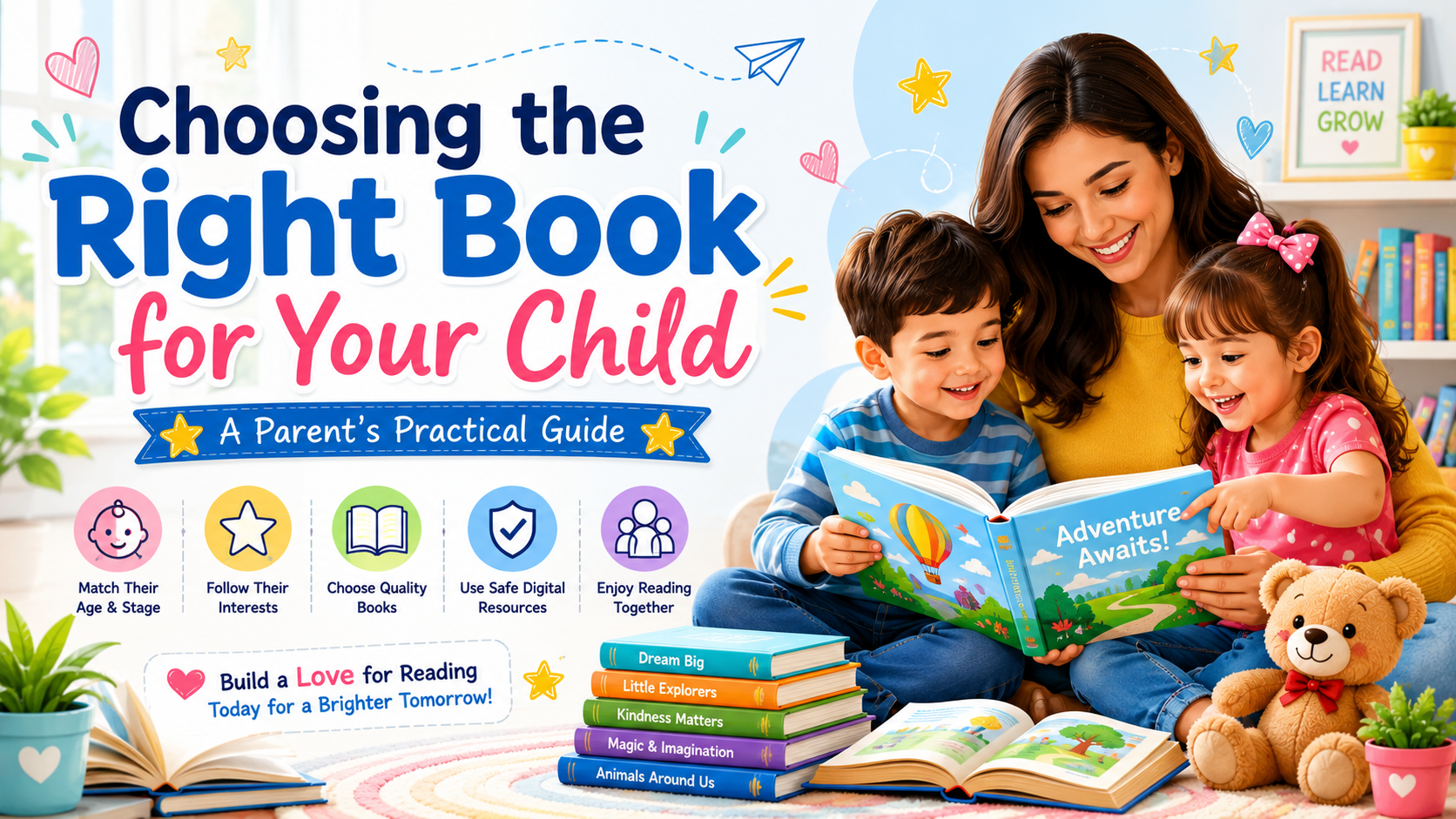
Choosing the Right Book for Your Child: A Parent’s Practical Guide
Choosing the Right Book for Your Child: A Parent's Practical Guide
Every child is born with a sense of wonder and natural curiosity about the world around them. As parents, one of the greatest things we can do is to nurture that curiosity and turn it into a lifelong passion for knowledge. Early stories are great for encouraging deep thought, emotional development, and strong language skills.
But stepping into a modern bookstore or browsing through a sprawling digital library can be a bit overwhelming. With thousands of titles, bright covers, and every genre imaginable, many well-intentioned moms and dads freeze, asking a critical question: How do I choose a book that my child will actually read instead of just sitting quietly on a shelf gathering dust?
The trick is knowing what your child is ready for developmentally, matching stories to the things they are interested in the real world, and creating a low-pressure environment. With the help of modern online resources and a smart download of Free kids E-books, you can easily build a varied home library, which will keep your little ones entertained.
Here is a comprehensive, well-researched guide on how to navigate the world of children’s literature and choose the absolute perfect book for your child’s age, personality, and reading level.
1. Match the Book Format to Their Developmental Stage
Children’s brains undergo massive changes in their first few years of life. A book that holds a four-year-old’s attention may not hold the attention of an eighteen-month-old toddler at all. The book’s structural format needs to match your child’s sensory and cognitive capabilities to keep him engaged.
Infants and Toddlers (Ages 0-2)
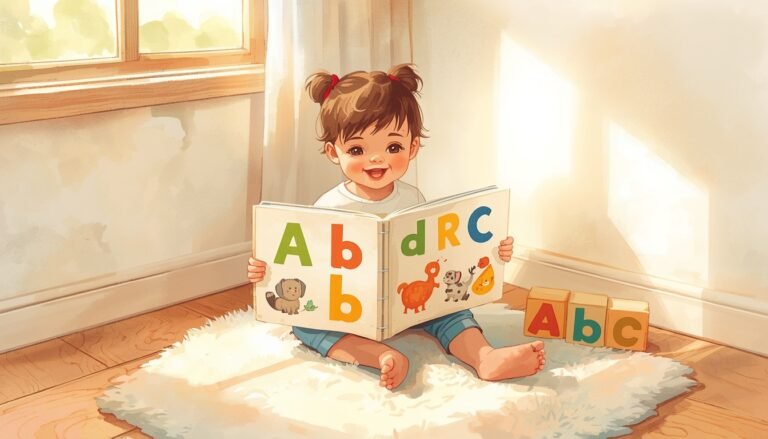
At this age reading is a purely tactile and sensory experience. Babies don’t understand complex plots. They react to high-contrast colors, rhythmic sounds, and tactile sensations.
- What to look for: Find durable board books, cloth books, or digital formats with large, bold illustrations and minimal text. Books with repetitive rhyming patterns or simple animal sounds work really well.
- The Goal: The main goal here is to create a positive, warm association with books. You want them to see a book as a fun toy to touch, point to, and explore with their hands.
Preschoolers & Early Readers (Ages 3–5)
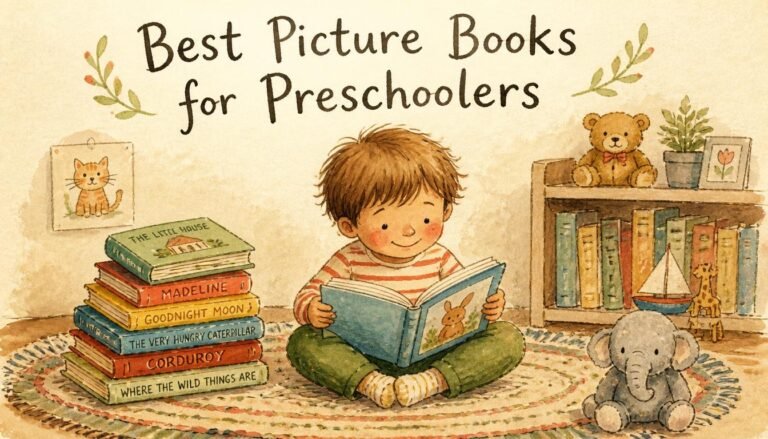
When children enter preschool, their vocabulary increases greatly, and they begin to learn basic narrative forms, that stories have a clear beginning, middle, and an exciting ending.
- What to look for: Look for picture books that are rich in familiar characters in everyday life with familiar human feelings, like sharing toys, going to a new school, or overcoming a small fear. This is the right place to find a modern online store and gather educational Free kids E-books that mix fun stories with colorful detailed illustrations.
- The Goal: Stories should be elongated to encourage imagination, introduce basic problem-solving skills, and teach valuable emotional control and empathy.
2. Follow Your Child’s Current Passion and Curiosity
It is a common mistake for adults to select books based on what they consider educational or prestigious. But forcing a child to read a book on historical facts when they’re currently obsessed with giant dinosaurs is a surefire way to breed reading resentment. For a habit to really thrive, personal passion has to be in the driver’s seat.
Bringing Literature to Life
Notice what your child naturally gravitates towards during playtime, walks outdoors, or when they ask their endless daily questions.
- The Dinosaur Fanatic: For the child who plays with plastic T-Rex toys all day long, seek out colorful adventure stories featuring friendly dinosaurs.
- The Nature Explorer: If your child likes to collect leaves and watch the bugs in the garden, look for nicely illustrated books about woodland animals, forests, or ocean life.
- The Creative Dreamer: If your kid loves to doodle abstracts and mix colors, look for stories that celebrate art, magic, and boundless imagination. Stories about crayons coming to life or rainbows in need of rescue are a good bet.
By linking reading material to their real-world obsessions, you take the friction out of studying. Reading is no longer a mandatory school assignment; it becomes a natural extension of their favorite playtime activities.
3. High Quality Captivating Visual Illustrations To Focus On
For young readers, particularly toddlers and preschoolers, the illustrations in a book are not simply decorative; they are the main engine of the narrative structure. Long before a child can read written letters or sentences, they are fully fluent in reading pictures, facial expressions, and visual colors.
Assessing Visual Storytelling
If you’re looking at a book or browsing digital shelves, try to see the artwork as your child would.
- Expressive Character Faces: Ensure that the main characters have clear, highly expressive faces. This allows your child to visually track emotions like happiness, surprise, sadness, or courage, thus significantly boosting their emotional intelligence.
- Vibrant and Thoughtful Color Palettes: Bright, lively colors naturally hold a child’s short attention span much better than dull, dark tones. Look for visual layouts where the colors reflect the underlying mood of the story.
- Visual Clues: The pictures should provide useful contextual clues that reinforce the written text so that early readers can predict what word is coming next and develop confidence in independent reading.
4. Continue Reading at the “Just Right” Level (The Goldilocks Rule)
Finding a book that matches your child’s exact reading confidence level is a tricky balance. If a book is too easy, they’ll be bored in minutes. They will be deeply frustrated and give up completely if the text is too difficult, with long, complex sentences. You want to find that sweet spot, that sweet spot of books that are comfortable but a little challenging.
The Simple “Five-Finger Rule” for Text (Physical or Digital)
One easy, practical technique that early childhood educators use to gauge the difficulty level of a book is the old stand-by five-finger check:
- Open the book to any random page that has a typical text block on it.
- Ask your youngster to read aloud from that page.
- Hold up one finger for each unfamiliar or challenging word they come across.
- 0–1 Fingers: The book is quite simple and ideal for easy, self-sufficient reading that boosts confidence.
- The perfect sweet spot is between two and three fingers. The book is a pleasant challenge that provides excellent chances to pick up new vocabulary under parental supervision.
- 4-5 Fingers: They are currently unable to read the book smoothly. Read it aloud to them as a reassuring bedtime tale, or save it for a later time.
5. Make Use of Secure Digital Resources for Convenience and Variety
You don’t need to spend thousands of dollars or fill your living room with large, bulky cardboard boxes to build a large, diverse home library. Digital devices have the potential to be incredibly effective educational tools in our more connected world when used correctly and with a purpose.
Embracing the Power of E-Books Wisely
Online platforms help parents to acquaint their children with new and intriguing books quickly. They ensure that their reading practice is never monotonous or repetitive.
- Look for Clean, Ad-Free Platforms: When you are purchasing digital books, make sure you download from clean websites. Not websites that have sudden pop-up ads or distracting games. You want your child to be focused on the story and the art.
- Maximize Free Digital Stores: Design stunning and unique images easily with professional pre-made templates, like Free kids E-books. This lets you try out different genres and art styles to see what your child loves best before investing in heavy physical copies.
- Maintain Screen Boundaries: Use digital devices purposefully. Grab a pillow, get on the couch, silence all your other notifications, and treat the screen like a beautiful physical picture book.
In conclusion, have faith in the process and maintain your motivation
Ultimately, there isn’t a single “perfect” book that suits every youngster on the earth. Finding what appeals to your special little reader is a joyous process of experimenting because literature is really individualized. If your child rejects a book you adore, don’t give up; just change course, pay attention to what they say, and try a different theme the next day.
To keep your resource rotation entirely new, start small by creating a cozy, face-out display nook, giving children the freedom to make their own decisions, and using online libraries. You can easily establish the psychological groundwork for a very successful, literate, and creative future by enriching their early years with colorful visual storytelling, themes of generosity, and shared family moments. Enjoy your reading!