Free eBooks About Sensory-Friendly Adventures for Kids
Each child sees the world a little differently. Some kids jump into loud, busy, colorful adventures. Some require a gentler entry point, a story that pulls them in without assaulting their senses. If you have a child who covers their ears at birthday parties, is overstimulated by too much visual noise on a page, or just takes in the world a little more intensely than other kids their age, then you know how important it is to find books that meet them where they are.
The good news is that sensory-friendly storytelling doesn’t need to be a niche, hard-to-find category. There’s a big world of free eBooks out there about sensory-friendly adventures for kids—stories that bring the fun and the imagination without the chaos that can make reading time stressful instead of soothing. This guide will tell you what makes a book truly sensory-friendly, why it’s important, and where to find free options that work for a broad spectrum of kids. This guide walks through what makes a book genuinely sensory-friendly, why it matters, and where to find free eBooks about sensory-friendly adventures for kids that work for a wide range of children.
What “Sensory-Friendly” Actually Means in a Children’s Book
It gets used a lot, but it’s worth breaking down what it actually looks like on the page.
A sensory-friendly book is often visually calmer, with less busy pages and more muted colors, and illustrations that give a child’s eyes somewhere to rest rather than a dozen competing details at once. It’s not about being boring or plain; it’s about being intentional.
And the pacing is generally more gentle. Sensory-friendly adventures are not based on sudden plot twists or loud moments (a monster suddenly appearing, a crash, a scream) but slowly build up tension and then resolve it in a warm manner. It’s still a “adventure,” a trip, a discovery, a little challenge, but it happens at a pace that won’t make a child’s stress levels skyrocket.
Language matters too. Kids need something to cling to, predictable, repetitive phrasing, while too complex or unpredictable sentence structures can make a story more difficult to follow for a child who’s already working hard to process everything else going on around them.
And often the best sensory-friendly books have an actual sensory element to the story itself, characters that talk about textures, sounds, or feelings in a way that mirrors what a sensory-sensitive child might experience, which can be very validating.
Why These Books Matter More Than People Realize
You may think that any picture book will do, but for the sensitive kids who get overstimulated easily, the right book can be the difference between story time being a connection experience or just one more thing to get through. That’s exactly why sensory-friendly adventures for kids deserve a closer look.
They reduce the barrier to enjoying reading. If a child is overwhelmed by a book’s visuals or pacing, they’re not going to associate reading with comfort; they’re going to associate it with stress. Sensory-friendly books remove that barrier, so it’s much more likely a child will actually want to sit down and engage.
They display quiet regulation. Stories where a character notices a big feeling, takes a breath, or works through overstimulation in a gentle way give kids language and examples for their own experiences without ever feeling like a lesson.
They provide dependable comfort. For many kids who are sensitive to sensory input, it is often the predictability that is so soothing. It is exactly what a gentle, repetitive story structure gives you, page after page of ‘I know what’s coming next,’ which can be very comforting.
They expand what “adventure” can mean. Adventure doesn’t have to be loud, chaotic, or high stakes. A quiet walk through a garden, noticing small details, can be a journey in itself, and showing this to kids helps them to see their own quieter way of experiencing the world as valid, not less exciting.
They’re really helpful to more kids than you would think. Sensory-friendly books are often associated with sensory processing differences or autism specifically, but the truth is that lots of kids benefit from quieter, gentler stories, including kids who are just more sensitive, easily overstimulated, or having a stressful time at home. This aligns closely with what organizations like the Child Mind Institute share about supporting sensory-sensitive children.
What to Look for When Choosing a Sensory-Friendly Adventure Book
Not every book branded as “calm” needs to be sensory-friendly, and not every sensory-friendly book needs to be quiet or slow. Here’s what actually matters when picking sensory-friendly adventures for kids.
Clean, uncluttered pictures. Look for pages that have a clear focus for the eye rather than busy backgrounds full of detail. White space is not empty space; it’s breathing room.
Soft blended color palettes. That’s not to say bright is bad. But a book that depends on a cohesive, gentle palette, rather than a chaotic mix of clashing colors, tends to feel calmer to flip through.
Slow build. A good sensory-friendly adventure still has a beginning, a minor conflict, and a resolution; it just doesn’t depend on sudden shocks or jolting revelations to hold a child’s attention.
Rhythm and repetition. Phrases that are repeated and patterns that a child can expect—these are not a fault of a story; they are a feature. Especially for kids who need the comfort of predictability.
Characters who are emotionally honest. Characters label what they’re feeling, “That was a lot of noise” and “I needed a quiet minute,” providing kids with a mirror for their own experiences without ever turning the story into a lecture.
A calm and satisfying ending. The adventure should end sweetly, with a child feeling settled rather than revved up just before bed.
Types of Sensory-Friendly Adventures Worth Exploring
Sensory-friendly adventures for kids don’t have to mean one-size-fits-all. A few different styles tend to work particularly well.”Sensory-friendly” is not a one-size-fits-all proposition. There are some different styles that tend to work very well.
Nature walks. Quietness. Stories about seeing small things, a ladybug on a leaf, and the sound of wind in grass give adventure through observation, not action. These are usually good for kids who like the idea of discovery but don’t need high drama to keep their interest.
Gentle “big feelings” trips. Sensory-sensitive kids benefit from direct, relatable representation in stories where a character encounters something overwhelming (like a loud party, a crowded room, or a scratchy sweater) and figures out how to feel better for themselves.
Adventures in slow-growing friendships. These stories are not about fast-paced action but more about a character slowly developing confidence or connection with someone new, and this is something that tends to happen at a naturally calmer pace.
Adventures at home. Some journeys don’t need a forest or an ocean. A story about a small adventure in a familiar space, exploring under the bed or finding something new in the backyard, can offer all the wonder of “adventure” without any of the overstimulation of unfamiliar, chaotic environments.
Rhythmic repetitive tales. Sensory-sensitive kids get an anchor to hold onto throughout the story in books with a repeated phrase or structure (“first this, then this, then this”), making the adventure feel safe even as it unfolds.
Tips for Reading Sensory-Friendly Books With Your Child
Choosing the right book is half the equation when it comes to sensory-friendly adventures for kids. How you read it together matters too. Selecting the right book is half the equation. It also matters how you read together.
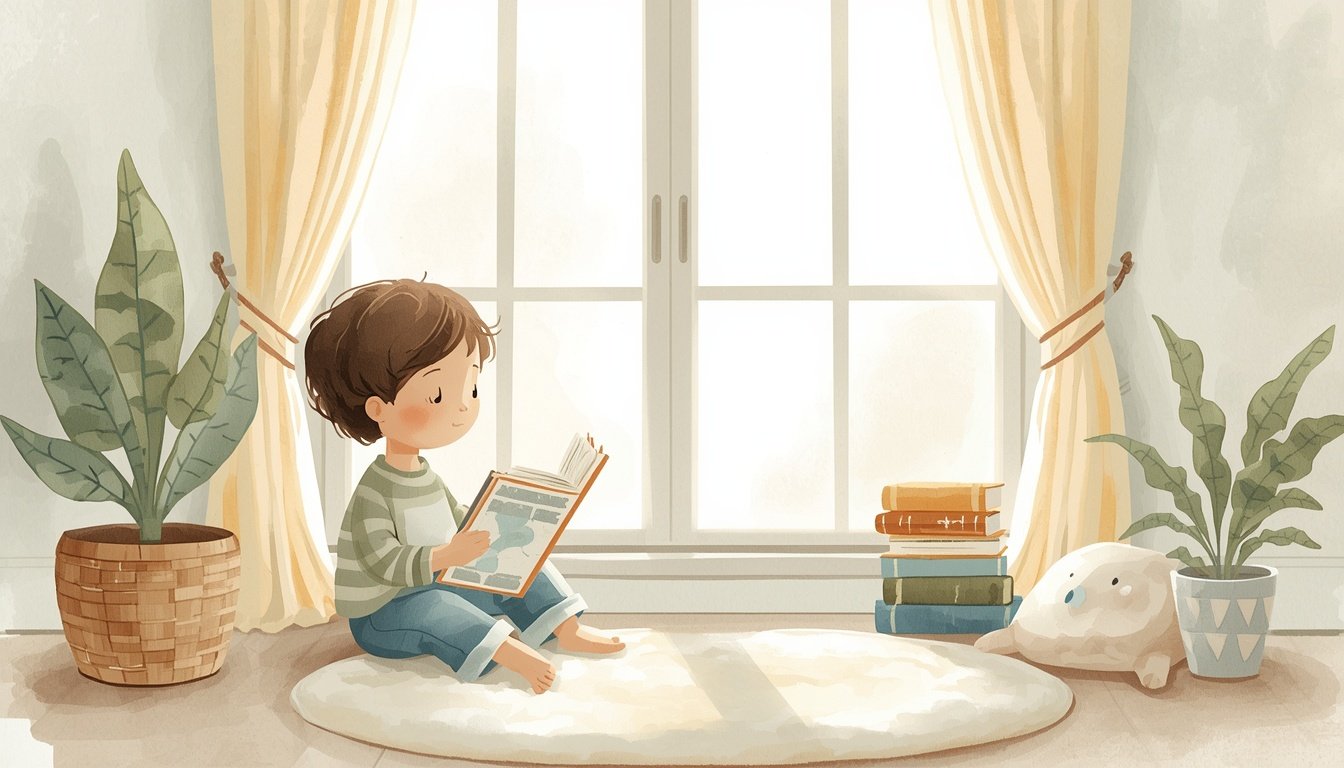
Read in a low stimulation setting. Dim lighting, a quiet room, and little background noise—these small adjustments can make a huge difference in how a sensory-sensitive child takes in the story.
Speak in a steady, calm voice. Save the operatic voices for other books. The soft, steady tone of the sensory-friendly stories adds to the calming effect the book is supposed to have.
Speak in a calm, steady voice. Reserve the dramatic voices for other books. The soothing effect of the book, which is meant to be a sensory-friendly story, is enhanced by a gentle, even tone.
Talk about what the character is feeling, not just what happens. Asking, “How do you think she felt when it got loud?” is a gentle, non-pressuring way to invite a child to relate the story to their own experience.
Don’t push the end. Let the resolution breathe. Sensory-friendly stories often do their best work in that last calm moment, so no need to close the book and move on right away.
Where to Find Free eBooks About Sensory-Friendly Adventures for Kids
That’s where parents often get stuck, sensory-friendly books are harder to find than regular picture books, and specialty titles can come with a specialty price tag.
And that is the gap that a free digital library helps to fill. A growing number of free, lightly illustrated picture books make it possible to assemble a rotating stack of calm, sensory-conscious stories without cost, without a long search, and without settling for books that overstimulate more than soothe. And whether you’re after a quiet nature story, a big-feelings journey, or a relaxing home-based adventure, free options available mean you’re never stuck grabbing a book that isn’t quite right. That’s the real value of having a steady rotation of sensory-friendly adventures for kids ready whenever you need them.
A Few Common Questions Parents Ask
Is a sensory-friendly book only for kids with sensory processing differences?
Not at all. These books are particularly great for kids who are sensitive to sensory input or have autism, but lots of kids benefit from calmer, gentler storytelling, especially at times of overstimulation like holidays, big transitions, or just the end of a long day. That’s exactly why sensory-friendly adventures for kids deserve just as much attention as any other genre.
How do I know if my child specifically needs sensory-friendly books?
If your child is overwhelmed by busy, loud, or fast-paced stories, covering their ears, turning away, or asking to stop, that’s often a sign that a calmer, more gradual style of storytelling would work better for them.
Are sensory-friendly books fun?
“Yes. Calm isn’t boring. A quiet discovery, a small brave moment, a gentle resolution—they can be as satisfying as a loud, action-packed plot, especially to a child who feels the world more keenly.
Signs a Sensory-Friendly Book Might Be a Good Fit
Sometimes we can see a need more clearly than we can articulate it. Here are a few signs that a more gentle, more sensory-conscious book might be a better fit than a typical busy picture book. Recognizing these signs makes it much easier to choose sensory-friendly adventures for kids that genuinely fit your child.
Your child asks to skip pages that feel “too much” or flips through them fast, without stopping. They plug their ears or look away when the read-aloud gets loud and chaotic, even if the story is not scary. They appear to prefer books in one-on-one, quiet reading rather than in group situations such as storytime at daycare or a busy library reading circle. Or they naturally drift back to the same few calm, predictable books again and again, while newer, busier titles are put away after one read.
None of these signs mean there is something “wrong.” They’re just good clues about what kind of storytelling experience actually works for your child, info that makes it a lot easier to pick books that click rather than books that linger half-read on the nightstand.
Final Thoughts
All children deserve stories that meet them where they are, not stories that require children to push through overstimulation just to enjoy a book. Sensory-friendly adventures prove that gentle doesn’t mean less exciting, it just means the excitement comes wrapped in a little more calm. This is exactly what sensory-friendly adventures for kids are designed to offer.
There’s also something to remember here as a parent: selecting a calmer book for your child isn’t “settling” for less of an adventure. That’s a kind of seeing them in a real way, understanding how they see the world and finding stories that play with that rather than against it. That kind of attentiveness tends to matter a whole lot more to a child than whether a book is loud or quiet, fast or slow.
Start this week with one free sensory-friendly ebook. Watch how your child responds. Do they relax into the pace, linger on quiet pages, or ask to read it again? Those little reactions tell more than any book description ever could.
Let that be your guide for the most sensory-friendly adventure to grab next. Give it some time and you will probably find that story time is becoming something your child looks forward to, a calm, connected moment in the day, rather than something that leaves them overwhelmed.
Looking for gentle, beautifully illustrated stories your child can truly settle into? Browse our full kids’ library for free picture books perfect for every kind of young reader.