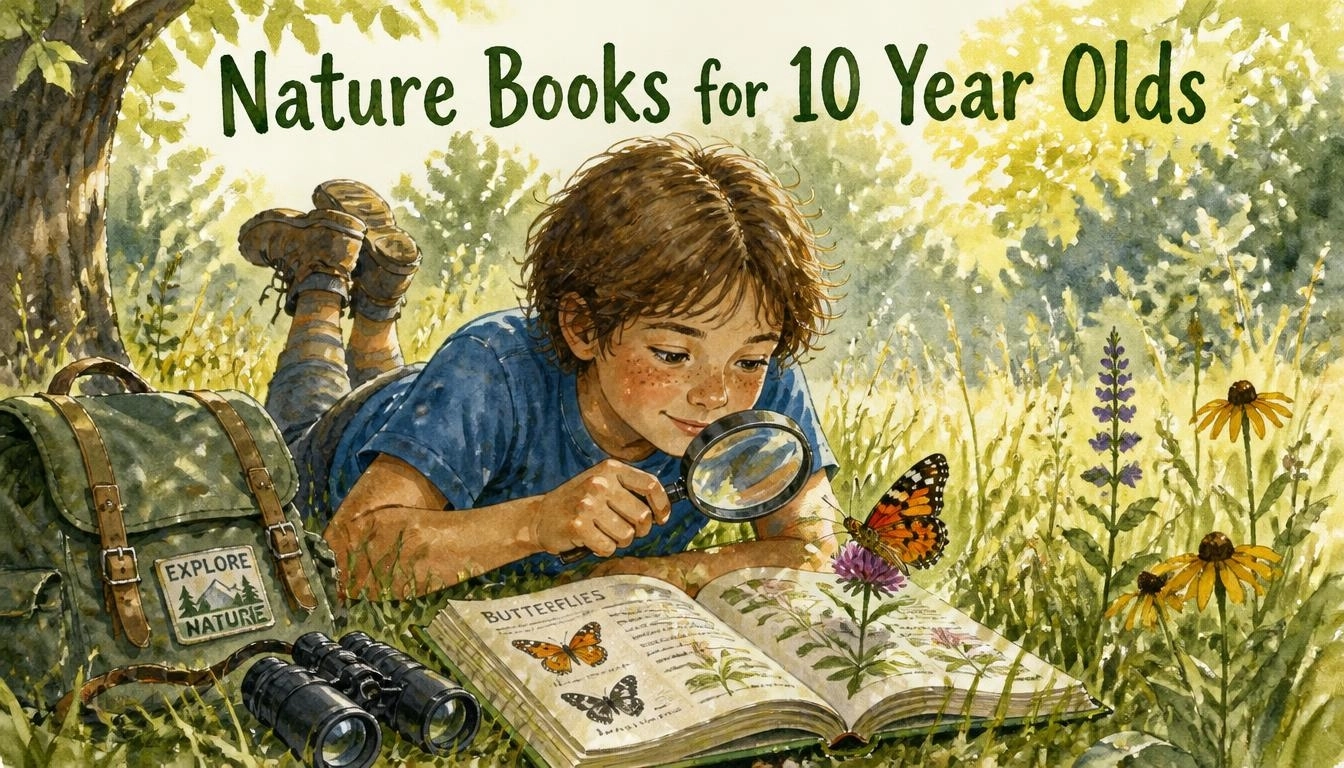
Nature Books for 10 Year Olds: Sparking Curiosity About the Outdoors
By age ten, most kids have moved past simple picture books about animals and are ready for something with a bit more depth, real facts, genuine discovery, and stories that make the natural world feel like an adventure worth exploring. Nature books for 10 year olds sit in a sweet spot, detailed enough to satisfy a kid who asks a hundred questions a day, but still accessible and genuinely fun to read.
This guide covers why nature books matter at this age, what makes one genuinely engaging rather than just educational, and where to find great options, including free ones, worth adding to your child’s shelf.
Why Nature Books for 10 Year Olds Matter So Much
Ten is a particularly good age for nature-focused reading, and it’s worth understanding why this window matters.
Curiosity is sharper, but attention span allows for depth. Unlike younger kids who need everything in short bursts, ten-year-olds can sit with a topic longer, follow a more detailed explanation, and genuinely enjoy learning something in depth rather than just skimming the surface.
It’s a natural bridge toward independent, nonfiction reading. Many kids at this age are starting to prefer nonfiction or fact-based content over purely fictional stories. Nature books offer a great entry point, since the real-world subject matter already holds built-in interest.
It builds a foundation for environmental awareness. Understanding ecosystems, animal behavior, and natural processes at this age lays important groundwork for the kind of environmental literacy that becomes increasingly relevant as kids get older. Organizations like the National Wildlife Federation offer excellent resources for parents looking to deepen a child’s connection to nature.
It connects well to outdoor experiences. A ten-year-old who reads about a specific ecosystem, forest, ocean, or desert often becomes more engaged on an actual hike, camping trip, or backyard exploration, turning reading and real-world experience into a reinforcing loop.
It often sparks a specific passion. Many adults can trace a lifelong interest in science, conservation, or a specific field, like marine biology, astronomy, or entomology, back to a single captivating book they read around this exact age.
What Makes a Great Nature Book for a 10 Year Old
Not every nature book holds a ten-year-old’s attention equally well. A few things separate the genuinely engaging ones from the forgettable.
Real depth, not just surface-level facts. At this age, kids can handle, and often crave, more detailed explanations than “bears live in forests.” Books that explain the “why” behind natural phenomena tend to resonate far more than simple fact lists.
A narrative or sense of discovery, even in nonfiction. The best nature books at this age read less like a textbook and more like an exploration, following a specific animal’s life cycle, documenting an expedition, or building toward a surprising natural fact.
High-quality photography or detailed illustrations. Visual content matters enormously for nature books. Rich, accurate images help ten-year-olds connect written facts to the actual appearance and scale of what they’re reading about.
A hook that goes beyond “educational.” Surprising facts, unusual creatures, and dramatic survival stories—these elements keep nature books feeling exciting rather than like assigned reading, even when they’re genuinely packed with real information.
Content that respects a ten-year-old’s intelligence. Overly simplified or condescending language tends to turn off readers at this age. The best nature books trust kids to handle real vocabulary and nuanced ideas, with context to support understanding.
Types of Nature Books Worth Exploring for 10 Year Olds
Nature books for this age span a wide range of formats and focuses. Here’s a breakdown to help you find the right fit.
1. Animal Deep-Dive Books
These focus on a single animal or species in detail, including behavior, habitat, and life cycle, often including surprising or little-known facts. They work particularly well for kids with a specific animal obsession, like sharks, wolves, or big cats, that they want to understand more deeply.
2. Ecosystem Exploration Books
Rather than focusing on one creature, these books explore an entire environment, rainforests, coral reefs, and deserts, showing how different plants, animals, and natural processes interact within that system.
3. Survival and Adventure Nature Stories
Blending real nature facts with a narrative structure, these books often follow an explorer, scientist, or even a fictional character navigating a wild environment, combining genuine information with page-turning storytelling.
4. Hands-On Nature Guides and Field Books
Practical, activity-based books, bird identification guides, backyard bug-finding books, simple nature journaling prompts give ten-year-olds a reason to take their reading outside and apply it directly.
5. Weird and Wonderful Nature Fact Books
Built around surprising, unusual, or downright bizarre natural facts, these books tend to be especially popular with reluctant readers, since the format rewards flipping around and reading in short, engaging bursts rather than cover to cover.
How to Choose the Right Nature Book for Your Child
Follow existing interests first. A kid who’s been asking about sharks for months will engage far more with a shark-focused book than a general ocean overview. Starting with a known interest almost always works better than a broad introduction.
Consider reading format preferences. Some ten-year-olds prefer a traditional narrative structure start to finish, while others do better with a book they can dip into randomly, flipping to whatever catches their eye. Matching the format to your child’s reading style matters as much as the subject matter.
Balance depth with accessibility. Look for books that clearly explain any more advanced vocabulary or concepts in context, rather than assuming prior knowledge, especially if your child is newer to nonfiction reading.
Mix photography-heavy books with narrative ones. A varied nature collection, some highly visual, some more story-driven, keeps things interesting and exposes kids to different ways of engaging with the same broad subject.
Extending Nature Books Into Real-World Activities
A nature book doesn’t need to stay confined to the page. A few ways to extend the learning into hands-on experience.
Take a related outdoor walk or hike. If your child just read about forest ecosystems, a walk in a nearby wooded area, with an invitation to spot things mentioned in the book, reinforces the reading in a very concrete way.
Start a simple nature journal. Encouraging kids to sketch or write about things they observe outside, connecting it back to what they’ve read, builds both observational skills and a deeper relationship with the material.
Visit a zoo, aquarium, or nature center. Seeing an animal or ecosystem they’ve read about in person often deepens interest significantly, turning book knowledge into a memorable, tangible experience.
Encourage follow-up questions and research. If a book sparks a specific question it doesn’t fully answer, helping your child look into it further, through another book, a documentary, or a simple internet search together, reinforces that curiosity is worth following.
A Few Questions Parents Often Ask
My 10 year old prefers fiction. How do I get them interested in nature books?
Narrative-style nature books, survival stories, and expedition accounts tend to bridge this gap well, since they offer the storytelling structure fiction-loving kids enjoy while still being packed with real information.
Are nature documentaries just as good as nature books?
They complement each other well rather than replacing one another. Documentaries offer visual and motion-based learning, while books allow for deeper, self-paced exploration of specific facts and details that a documentary might only touch on briefly.
My child only wants to read about one specific animal. Should I encourage broader topics too? A deep, specific interest is genuinely valuable and often leads naturally to broader curiosity over time. There’s no need to force variety; following one passion deeply often builds stronger engagement than a scattered, general approach.
How do I know if a nature book is too advanced or too simple for my 10 year old?
Previewing a few pages together is the easiest way to gauge fit. If your child can follow the content with occasional explanation but isn’t totally lost and isn’t bored by overly basic facts, it’s likely a good match.
Where to Find Free Nature Books for Kids
Building a strong nature-focused reading collection doesn’t need to be expensive. A growing library of free, well-illustrated books and stories makes it possible to explore different ecosystems, animals, and natural wonders without needing to buy a new book every time your child’s curiosity shifts to a new topic. That’s exactly where a free collection of nature books for 10 year olds makes the biggest difference.
Whether your ten-year-old is fascinated by ocean life, forest creatures, or the night sky, having free options on hand means their natural curiosity always has somewhere new to go.
Signs a Nature Book Is Really Landing
A few small signs tend to show up when a nature book genuinely clicks with a ten-year-old. They start sharing random facts unprompted, over dinner, during a car ride, clearly eager to tell someone what they just learned. They begin noticing related things in everyday life, pointing out a bird species on a walk or asking follow-up questions that go beyond what the book actually covered. Or they return to the same book repeatedly, not because they need to reread it for comprehension, but simply because they enjoy revisiting the material.
None of these signs need to appear immediately or with every book. Interests at this age can take time to develop, and a book that doesn’t fully land might still plant a seed that grows later, sometimes sparked by something as small as a single surprising fact that sticks with them long after the book itself has been set aside.
Final Thoughts
Nature books for 10 year olds do something genuinely valuable; they take a child’s natural curiosity about the world and give it real depth, turning simple questions into a lasting fascination with how things actually work outside. Whether your child is drawn to a single favorite animal or wants to explore entire ecosystems, there’s a book out there that matches exactly where their curiosity currently points.
Start by picking one nature book that connects to something your child already loves, a favorite animal, a place they’ve visited, or a question they keep asking. Let that first book guide what comes next, and you may find a genuine, lasting passion for the natural world taking root, one page and one outdoor adventure at a time.
Looking for more free, engaging books to spark your child’s curiosity? Browse our full Kids Library for stories and books perfect for curious young minds.