First Day of School Anxiety: How to Help Your Child Feel Ready
Most houses have a very particular energy the night before the first day of school. There’s the thrill of new shoes and a new backpack, and right along with it, often quietly, is worry. A racing heart at bedtime. Stomachache at breakfast. Sudden. Tears at drop-off that appear out of nowhere. First day of school anxiety is so common, and understanding it instead of just trying to talk a child out of it makes a real difference.
In this guide, we look at the reasons behind first day of school anxiety, how to spot it, and gentle, practical ways to help your child feel more prepared, including the genuinely useful role books can play in helping to calm those nerves.
Why First Day of School Anxiety Happens
It’s important to understand what’s really going on underneath the tears or the clinginess, rather than assuming a child is just being dramatic or difficult.
The unknown feels bigger to kids than it does to adults. New classroom, new teacher, new routines—kids don’t have years of “I’ve done new things and survived” to draw on like adults do. For them, every new detail is more emotionally charged.
Separation is often the real trigger, not school itself. For many younger children, the anxiety is less about the classroom itself and more about being in an unfamiliar place away from a parent or trusted caregiver for a period of time. That difference is important to how you approach reassurance.
Kids pick up on parental stress too. Kids can sense that energy, even if they don’t know why, if a parent is anxious about the transition, if they’re rushing, tense, or overly emotional at drop-off. Child development experts at Zero to Three often note that a parent’s own calm demeanor plays a significant role in how children handle new transitions.
Overstimulation plays a role. A new environment means new sounds, new smells, a new schedule, and a room full of unfamiliar faces all at once. For some kids, that sensory load is enough to trigger a stress response, not related to any particular fear.
It’s developmentally completely normal. It’s normal and healthy to feel anxious on the first day of school. It doesn’t mean there’s something wrong with your kid or your approach; it means they’re confronting something truly novel.
How to Recognize First Day of School Anxiety
Anxiety doesn’t always look like worry on the surface in young kids. Here are some common warning signs to watch for in the days leading up to school:
More clingy or unwilling to be out of your sight even when doing normal daily activities. Physical complaints such as stomach aches or headaches, especially at bedtime or before discussing school. Trouble sleeping or waking more nights than usual. Regression in behaviors they had outgrown (thumb sucking, accidents) More irritability or meltdowns over things that normally wouldn’t bother them.
None of these signs indicate that something is seriously wrong; they are just your child’s way of processing a big transition, often before they have the words to say what they are feeling.
Practical Ways to Ease First Day of School Anxiety
1. Visit the School Beforehand, If Possible
The morning routine Practice the real morning routine a few days before school starts. Wake up at the proper time. Dress. Eat breakfast. Knowing the order of events reduces the number of “new” things your child has to process on the actual first day.
2. Practice the Morning Routine in Advance
Many schools have an open house or an opportunity to visit the classroom before the first day. Even a quick visit, seeing the classroom, meeting the teacher, and finding the bathroom, can go a long way toward reducing the unknown variable that fuels so much of this anxiety.
3. Talk About What to Expect, Honestly and Simply
Walk them through the day, in simple terms, what happens first, what happens at lunch, and when you’ll pick them up. Honest, calm information usually generates more trust than forced positivity. Avoid overpromising that everything will be perfect or fun.
4. Create a Predictable Goodbye Ritual
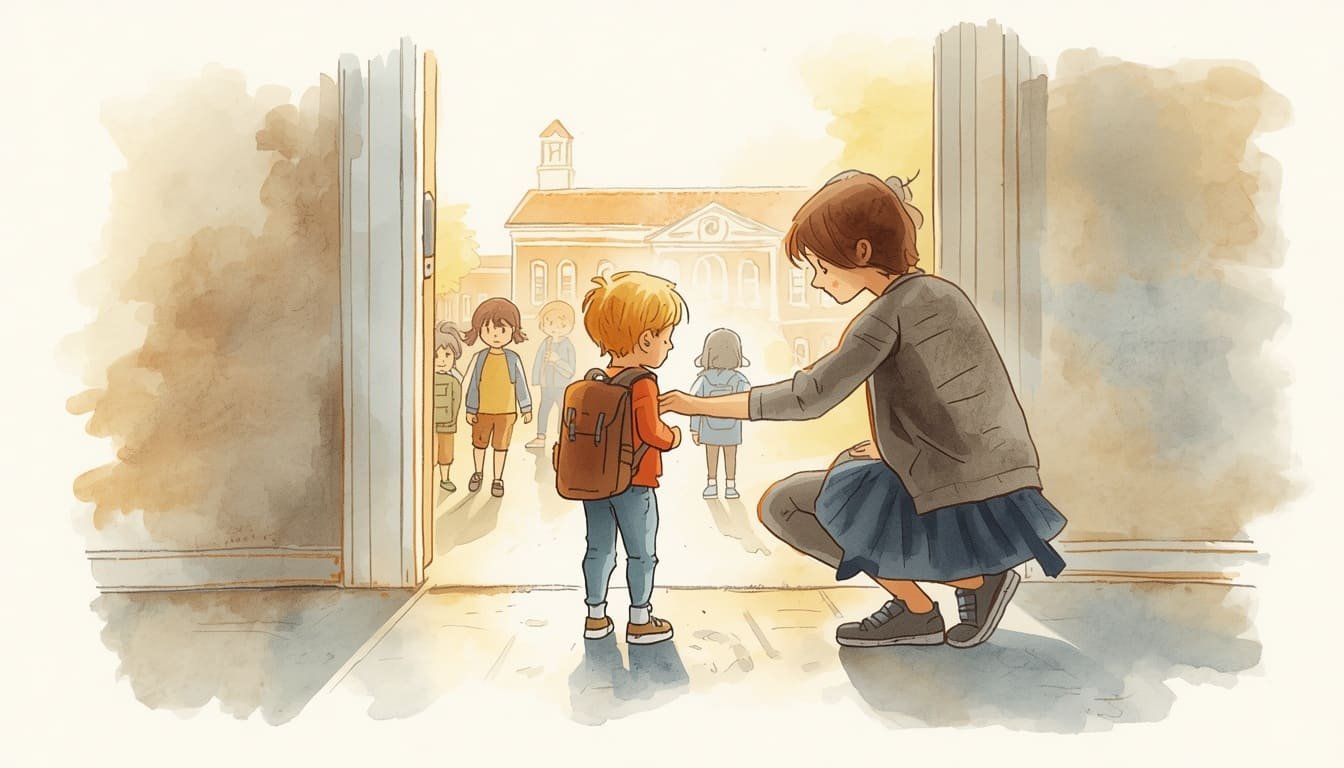
A consistent, short goodbye routine (a specific hug, a phrase you always say, or a little wave through the window) gives kids something familiar to hold onto in an otherwise unfamiliar moment. And keeping goodbyes short, not lingering, also tends to help more than it might seem like it should.
5. Validate the Feeling Instead of Dismissing It
Saying “there’s nothing to be scared of” can unintentionally make a child feel unheard. Try instead: “It’s okay to feel nervous. Lots of kids feel that way on the first day, and it usually gets easier.” Naming the feeling as valid, rather than something to be talked out of, tends to help kids move through it faster.
6. Use Books to Rehearse the Experience
The story will be about a character’s first day, their nerves, and how they made it through. Reading this gives kids a low-stakes chance to mentally practice what’s ahead. This is one of the most effective and genuinely fun tools out there, and one that many parents underutilize.
7. Keep a Small Comfort Item on Hand
A small thing from home, slipped into a backpack or pocket, a family photo, or a small toy can be a quiet source of reassurance during the day without drawing the attention of classmates.
How Storybooks Help With This Specific Kind of Anxiety
Books about starting school work especially well for this kind of anxiety because they allow a child to experience the situation one step removed, watching a character go through it, before they have to live through it themselves.
A good first-day-of-school story usually has a character who is truly nervous, not fearless from the start, and then the character finds their footing during the day. The structure is almost exactly what you hope your own child will go through—worry and then adjustment, which makes the story feel like a rehearsal and not just entertainment.
It tends to work best if you read this kind of book several times in the days leading up to school, rather than just once the night before. Repetition allows the time for the reassuring message to actually sink in, rather than a single conversation that is easily forgotten.
What to Avoid Doing, Even With Good Intentions
Avoid making a big, emotional production of drop-off. A calm, short goodbye when a child is upset usually helps them settle down quicker than a long, emotional one. It’s hard, but…
Avoid bribing anxiety away. Telling a child that they’ll get a treat or a reward “if you stop crying” can unintentionally teach them that the objective is to push the feeling away instead of dealing with it.
Avoid comparing your child to siblings or peers who seem fine. Saying “Your brother wasn’t scared at all” just makes an anxious child feel worse about their own reaction, not more confident.
Avoid skipping the goodbye entirely to dodge tears. Sneaking away without saying goodbye might save a crying spell, but it can raise anxiety over time because children learn that a parent might just disappear without warning.
A Few Questions Parents Often Ask
How long does first day of school anxiety usually last?
Most kids’ worst anxiety fades within the first week or two as they get used to the routine. If the distress continues for a long time or gets worse, it might be worth mentioning to your child’s teacher or pediatrician.
My child seemed fine at drop-off but melted down after school. Is that normal?
Very common, often referred to as “after-school restraint collapse.” A lot of kids can keep it together during the school day and then let the stress go once they are back in a safe, familiar environment with you.
Should I stay and watch from outside if my child is struggling?
Even if it feels counterintuitive, a clean, confident goodbye typically works better than lingering. Watching from the outside can inadvertently prolong separation and make it more difficult for a child to settle in.
Is it normal for anxiety to reappear after a school break?
Yes. This is common after weekends, holidays, and especially longer breaks such as summer vacation. The same strategies, routine, honest conversation, and calm goodbye ritual tend to help just as much the second or third time around.
Helping Siblings and Family Routines Adjust Too
The anxiety of the first day of school is not just for the child leaving the house, it can impact the entire household. Younger brothers and sisters can feel the tension but not know why, and parents themselves often have their own quiet worry about how the day will turn out. In the days before and after the first day, try to keep the household routine as calm and predictable as possible, rather than adding extra changes or activities. It gives everyone a little more steadiness to lean on.
It’s also worth remembering that a parent’s own composure at drop-off matters more than any single thing that’s said. Kids are remarkably good at reading tone and body language, even when the words themselves sound reassuring. A genuinely calm, unhurried goodbye tends to communicate safety far more effectively than a perfectly worded speech delivered with visible tension.
Final Thoughts
First day of school anxiety is one of those challenges that seems enormous in the moment but tends to sort itself out faster than parents expect, especially with a little preparation and a lot of patience. Acknowledging the feeling, providing predictability for the transition, and using tools such as storybooks to help your child mentally rehearse what is coming can really help.
If your child is heading for their first day, start the conversation a few days before rather than waiting for the morning of. Read a story about starting school together, talk openly about what to expect, and keep your own goodbye calm and short. Most kids find their footing faster than the anxious morning suggested they would.
Want tender stories to help prepare your child for a big day? Browse our full Kids Library for FREE picture books about beginning school, courage, and big feelings.