Toddler Bed Transition: 7 Simple Tips and a Free Book
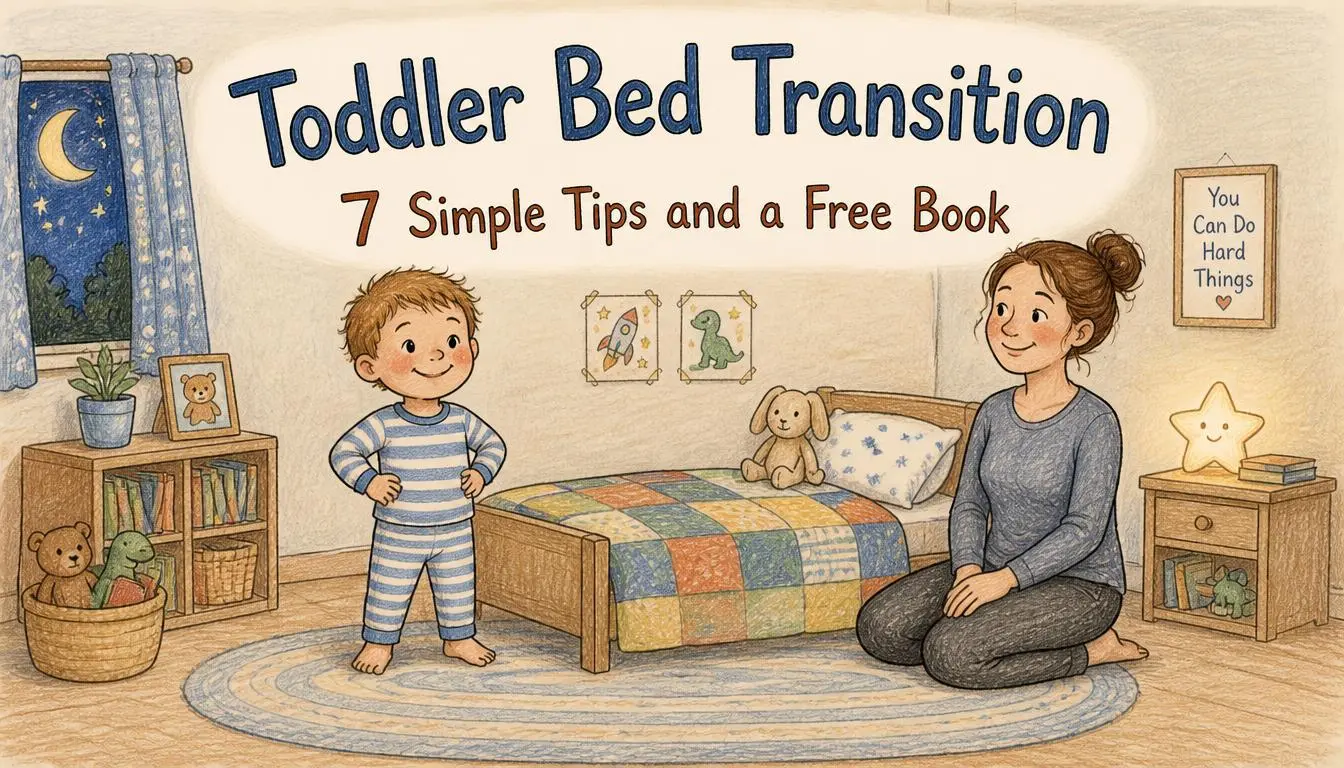
A toddler bed transition is a big milestone for your child and you. One day your little one is tucked in a crib. The next are a “big kid” with a real bed, a new view of the room, and the freedom to hop out whenever they want. It’s exciting, it’s a bit scary, and it’s sometimes a little bumpy.
The good news is that transitioning to a toddler bed doesn’t have to be stressful. This guide will tell you how to know when your child is ready, 7 simple tips to make the move smoother, bedtime stories to help little ones feel brave, and what to do when things don’t go perfectly.
When Is the Right Time for a Toddler Bed Transition?
There is no ideal age. Most toddlers graduate from crib to bed between the ages of 18 months and 3 years, and many families make the switch at age 2. Watch your child, not the calendar. Health experts say it could be time to watch out for these signs:
- Your child can pull themselves up and over the crib rail or can get a leg over it.
- The crib mattress is already at its lowest setting, and the top rail is less than three-quarters of your child’s height.
- Your child has reached the height or weight limit listed in the crib’s instructions.
- Your child is asking about a big bed.
- Your child is working on toilet training and needs to get to the potty on their own.
If your toddler is climbing out, safety comes first, because a fall from a crib is more dangerous than a roll out of a low bed. You can read more about the signs in this guide on the signs your toddler is ready for a bed from CHOC, or in the Cleveland Clinic’s advice on when and how to transition to a toddler bed.
Try not to stack the move on top of other big changes, like a new baby, a new home, or the start of preschool, if you can avoid it. One big change at a time is easier for little ones.
7 Simple Tips for a Smooth Toddler Bed Transition
These tips work for most families. Pick the ones that fit your child, and be patient. A toddler bed transition is a process, not a one-day event.
1. Make the Room Safe First
Now that your child can get out of bed, the whole room is open to them. Before the first night:
- Add guardrails to the bed and fit them against the mattress so there are no gaps.
- Don’t place the bed under a window.
- Skip the pillow until your child is at least 2, and skip bunk beds and other raised beds for children under 6.
- Put a soft rug beside the bed, just in case.
- Use a baby monitor, or tie a bell on the door, so you know when your child is up.
2. Talk About the Big Kid Bed Ahead of Time
Start the conversation a few days or weeks before the switch. Ask your child what they think, and explain what a big kid bed means: sleeping in it all night and calling you if they need help. When children know what to expect, they feel more in control.
3. Let Your Child Choose the Bedding
A favorite color, a cozy blanket, or a bedspread with their favorite animal builds excitement. Letting your toddler pick something for their new bed gives them a say in the change, and it makes the bed feel like theirs.
4. Keep the Bedtime Routine the Same
The bed is new, so the routine should stay familiar. Keep the same order every night, such as bath, pajamas, books, a song, and lights out. Give your child a warning about 30 minutes before bedtime, so they know it’s coming. A predictable routine tells your child that bedtime is calm and safe, even in a new bed.
5. Try Naptime First
If you can, start with naps. A daytime nap is lower pressure, and it lets your child get used to the new bed before nights begin. When naps go well, bedtime is easier.
6. Read a Story About It
Stories let little ones practice a scary change in a safe way. Reading about a character who feels nervous about a new bed and then feels brave helps your child feel less alone. We love My Big Kid Bed!, a free picture book that helps toddlers conquer bedtime fears and feel brave about their first big kid bed.
7. Stay Calm and Consistent
Your toddler is likely to test the new freedom. If they get out of bed, walk them back right away, calmly and with few words. Skip the long chats or extra play, and give lots of praise when they stay in bed. Repeating this the same way every time helps your child learn what to expect.
Bedtime Stories for a Toddler Bed Transition
The right bedtime story makes a toddler bed transition feel cozy instead of scary. Here are a few free picture books from our library to try:
- My Big Kid Bed! is a heartwarming story, filled with warm, hand-illustrated artwork, that helps toddlers feel brave about their first big kid bed. Made for ages 2-6.
- Good Night, Little Turtle follows a lovable little turtle who wishes his forest friends good night before drifting off to sleep. Made for ages 2-5.
- Sleepy Sheep Say Goodnight is a gentle, repetitive bedtime story for toddlers ages 1-3.
- I Love You to the Moon and Back is a warm picture book about a parent bear and their little cub, celebrating love and security.
For more cozy ideas, see our guide to free bedtime stories for 3 year olds, and our tips on how to read aloud for preschoolers.
Common Toddler Bed Transition Problems (and What to Try)
Even with great preparation, a toddler bed transition can have bumps. Here is what to try:
- My child keeps getting out of bed. Return them to bed right away, calmly and quietly, every time. It may take several nights, but consistency works.
- My child is scared of the new bed. Add a nightlight, a favorite stuffed toy and a calming story. Talk about feelings in the daytime, not at lights-out.
- My child wakes up at night. Keep your response the same each time, with a quick check, a hug, and a walk back to bed. Avoid starting new habits, like lying down with them, unless you want to keep them.
- My child wants the crib back. Acknowledge the feeling, and remind them how big and brave they are. If safety isn’t a concern, some families pause for a few weeks before trying again.
- My child sleeps fine at naps but struggles at night. Nights are harder because it’s dark and everyone is tired. Stick with the routine and give it time.
A Simple Bedtime Routine to Try
Here is a sample routine you can adapt:
- 30 minutes before: Tell your child it will soon be time for bed.
- Bath and pajamas: A warm, quiet bath helps everyone wind down.
- Teeth and potty: Make it a regular part of the routine.
- One or two books: Choose a calm story, and keep the lights low.
- A song and a cuddle: A short lullaby and a goodnight phrase signal that it’s time to sleep.
- Lights out: Say goodnight, and leave the room.
How Long Does a Toddler Bed Transition Take?
Some children adjust in a few days, while others take a few weeks. A toddler bed transition rarely goes smoothly from the very first night, and a setback doesn’t mean you’ve done anything wrong. Keep the routine steady, praise every success, and remember that your child is learning a new skill, one night at a time.
Reading Free Ebooks at Bedtime
Our free books are PDFs, so you can read them on a phone, tablet, or computer. Screens close to bedtime deserve a little care, though. Many pediatric experts, including the American Academy of Pediatrics, suggest switching screens off about an hour before sleep. If you read from a device, lower the brightness, use a warm night mode, and hold the device yourself and read together. On busy nights, read the ebook earlier in the evening, and finish with a quiet, screen-free story, song, or cuddle.
Frequently Asked Questions
What is the best age for a toddler bed transition?
Most toddlers move to a bed between 18 months and 3 years old, and many families switch around age 2. Rather than following a set age, look for signs like climbing out of the crib, outgrowing its size limits, or asking for a big bed.
Do I need bed rails for a toddler bed?
Health experts suggest making sure you can add guardrails to the bed to prevent falls, and fitting them against the mattress and frame so there are no gaps. Check the manufacturer’s instructions and ask your pediatrician if you have questions.
Should my toddler have a pillow?
Many experts suggest waiting on a pillow until your child is at least 2 years old.
My toddler keeps getting out of bed. What should I do?
Return them to bed right away, calmly and with few words, every time. Give lots of praise in the morning when they stay in bed. Consistency is what teaches a new routine.
Can I start the toddler bed transition with naps?
Yes. Starting with naptime is a gentle way to let your child get used to the new bed, since a daytime nap has less pressure than a night.
Final Thoughts
A toddler bed transition is a big step, but it’s also a happy one. With a safe room, a steady routine and a story to help little ones feel brave, most children settle in sooner than their parents expect. Be patient, celebrate small wins, and trust that your child will get there.
Start tonight: read My Big Kid Bed! Together, talk about the exciting changes ahead, and let your child pick a favorite blanket. Looking for more cozy bedtime reads for your toddler bed transition? Browse our full Kids Library for free picture books your child will love.