Free Educational Games for Kindergarten: 12 Best Picks
Ask a kindergartener what they want to do after school, and “play a game” often tops the list. The good news is that a game can also be a gentle way to practice letters, sounds, and counting, as long as you pick the right one.
The tricky part is finding games that are genuinely free, safe, and worth your child’s time. In this guide to free educational games for kindergarten, you’ll find 12 popular picks (including screen-free ones), what each one is good for, what to watch out for, and simple tips for keeping screen time balanced.
A quick note: we haven’t tested every game here. This guide is based on publishers’ descriptions and independent reviews, so please check each site or app for current features, ads, and prices before your child plays.
Why Games Work for Kindergarteners
Kindergarteners learn best through play. A short, fun game can turn repetition into something children ask for, which helps with skills like letter sounds, counting, and recognizing shapes.
But games are a supplement, not a replacement for reading together, talking, and hands-on play. The best results usually come when an adult sits nearby and joins in for a few minutes.
What to Look For in Free Educational Games for Kindergarten
Before your child presses play, check for:
- Clear learning goals. Look for letter sounds, counting, and early reading, rather than games that are only tapping and noise.
- Right difficulty. The game should be easy enough to feel successful and hard enough to be interesting.
- Few ads, and no tricks. Heavy ads, pop-ups, and prompts to buy things can distract or confuse young children.
- No pressure to spend. Be careful with in-app purchases, and use parental controls.
- Privacy. Read how a site or app handles children’s data. Child privacy rules differ by country.
- Short sessions. Games that fit into 10 to 15 minutes are best for this age.
12 Best Free Educational Games for Kindergarten
1. Khan Academy Kids
Best for: an all-in-one free start | Ages: 2 to 8
A free, ad-free app with read-along stories, phonics, early writing, math, and more, with no in-app purchases. Many features work offline. Keep in mind: it covers many subjects, so it’s less deep than a phonics-only game.
2. PBS Kids Games
Best for: children who love familiar characters | Ages: about 2 to 8
PBS Kids offers many free games across reading, math, science, and social-emotional learning, and it’s run by a nonprofit. Children who know the shows often enjoy it more. Visit PBS Kids to explore. Keep in mind: the characters can make it hard to stop playing, so set a time limit.
3. Starfall
Best for: phonics and early reading
Starfall was created as a free public service to help children learn to read with phonics. The basics are free, and a paid membership unlocks more. Keep in mind: the style is simple, which some children love and others find plain.
4. Duolingo ABC
Best for: short daily lessons | Ages: about 3 to 8
A free app that teaches letters, phonics, and early reading in bite-sized lessons. Keep in mind: check the app store for any subscription options, as offerings can change.
5. ABCya
Best for: variety, including math and typing
ABCya has hundreds of games for preschool through fifth grade, which are free to play, with ads on the free version. A subscription removes the ads. Keep in mind: many games suit older children, so choose carefully by grade.
6. Teach Your Monster to Read
Best for: a playful phonics adventure
Children help a monster travel through reading quests, practicing letter sounds and blending. Keep in mind: the web version has been free, but app pricing has changed, so check the store.
7. Sheppard Software
Best for: math, science, and geography games | Ages: preschool to about second grade
A simple website with hundreds of free games. It’s ad-supported. Keep in mind: the look is plain, and the ads mean an adult should stay nearby.
8. National Geographic Kids Games
Best for: animal and nature fans | Grades: about K to 4
Free games organized by topics like animals, science, and reading. Keep in mind: some games are better for older children, so preview first.
9. Turtle Diary
Best for: quick skill games in math and reading
A free site with games across math, language, science, and art. Keep in mind: check which games match your child’s level.
10. Cool Kindergarten
Best for: literacy practice by a teacher-made site
Created by a teacher, it offers free games that focus on kindergarten literacy skills. Keep in mind: the design is simple, so it works best for focused practice.
11. Funbrain
Best for: older kindergarteners who like challenges | Ages: about pre-K to grade 8
A free site with games, books, and videos. It’s ad-supported. Keep in mind: many games are aimed at older children, and the ads can be distracting.
12. Screen-Free Games (No Device Needed)
Best for: days when you want a break from screens
Some of the best educational games for kindergarten need only paper and a few household items. See the ideas below.
Free Educational Games for Kindergarten by Skill
| Skill | Good game types |
| Letters and phonics | Khan Academy Kids, Starfall, Duolingo ABC, Teach Your Monster to Read |
| Counting and math | PBS Kids Games, ABCya, Sheppard Software, Turtle Diary |
| Science and nature | National Geographic Kids Games, PBS Kids Games |
| General learning | Khan Academy Kids, PBS Kids Games |
| Screen-free play | The games in the next section |
10 Screen-Free Educational Games to Try at Home
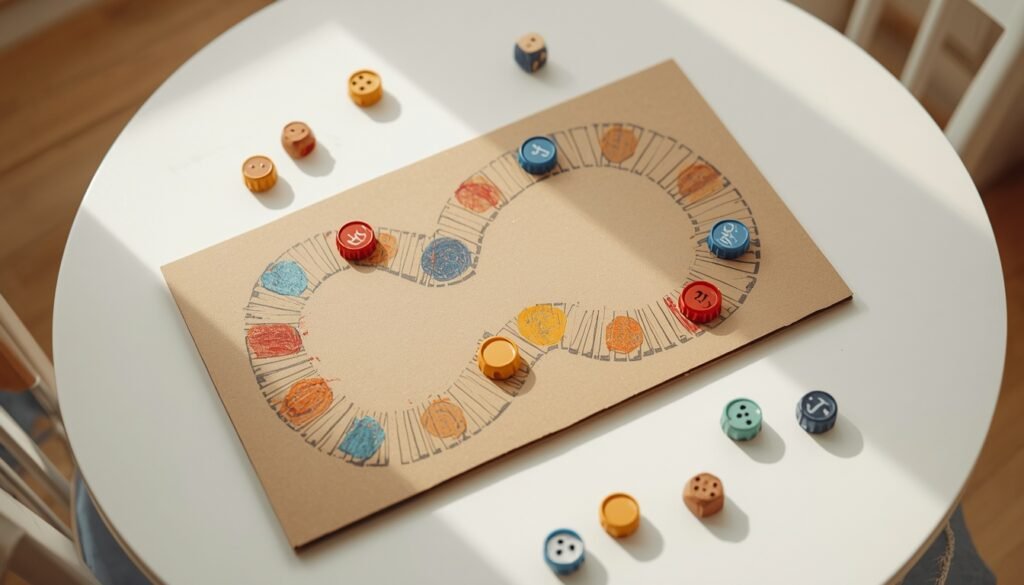
You don’t need a screen to play a learning game. Try these:
- Letter hunt. Find five things around the house that start with the letter “b.”
- Counting treasure hunt. Hide ten small items and have your child count them as they find them.
- Rhyme match. Write rhyming words on cards (cat, hat) and match the pairs.
- Sound bingo. Make a bingo card with letters. Call out a sound, and your child covers the matching letter.
- Shape scavenger hunt. Look for circles, squares, and triangles around the room.
- Number hopscotch. Draw numbers 1 to 10 in chalk or tape them on the floor, and hop on each one.
- Roll and count. Roll a die and take that many steps, claps, or jumps.
- Word-building with magnets. Make simple three-letter words on the fridge.
- Memory game. Make pairs of cards with letters or pictures and try to match them.
- Pretend shop. Use play money or paper coins to count and add up prices.
For more early reading games, see our guide to sight words for kids.
How to Keep Screen Time Balanced
Games are fun, but balance matters. Pediatric experts generally recommend limiting screen time for young children, choosing good content, and playing together when possible. A few easy habits:
- Set a clear limit. Decide in advance when the game ends, maybe 15 to 20 minutes.
- Play together. Ask questions like “What sound does that letter make?”
- Keep devices out of bedrooms and away from bedtime.
- Mix in real books. After a game, read a story together. Our reading apps for kids guide can help you choose apps that support reading.
- Check in often. Look at what your child is actually playing.
Common Mistakes to Avoid
- Letting games replace reading together. Stories and conversations matter more.
- Choosing games by popularity. The best game is the one that fits your child.
- Ignoring ads and in-app purchases. Use parental controls and check settings.
- Playing alone. Young children learn most when an adult joins in.
- Too many games at once. One or two good ones are plenty.
- Skipping breaks. Take a break and go outside after screen time.
Final Thoughts
The best free educational games for kindergarten are the ones your child enjoys and you feel comfortable with. Start with one or two from this list, play together for a few minutes, and see what your child responds to. Then mix in books, rhymes, and play away from the screen.
Games can add fun to learning, but your attention and encouragement are what really help. And when it’s time to wind down, you’ll find plenty of free stories to share in our free kids books library.
Frequently Asked Questions
What are the best free educational games for kindergarten?
Popular choices include Khan Academy Kids, PBS Kids Games, Starfall, Duolingo ABC, ABCya, and Teach Your Monster to Read. The best one depends on your child’s age and needs.
Are free educational games for kindergarten safe?
Many are, but check for ads, in-app purchases, and how data is handled. Read the privacy policy, use parental controls, and stay nearby while your child plays.
How long should a kindergartener play educational games?
Short sessions of about 10 to 20 minutes are usually plenty. Balance games with books, play, and outdoor time.
Do educational games help kindergarteners learn?
Games can be a useful practice tool for letters, sounds, and counting. They work best alongside reading together and hands-on play.
Are there free educational games for kindergarten without screens?
Yes. Letter hunts, counting games, bingo, and rhyme matching need only paper and household items.
What should I do about ads in free games?
Choose games with few or no ads when possible, stay close while your child plays, and use device settings to block in-app purchases.