Read Aloud for Preschoolers: 10 Simple Tips and Free Books
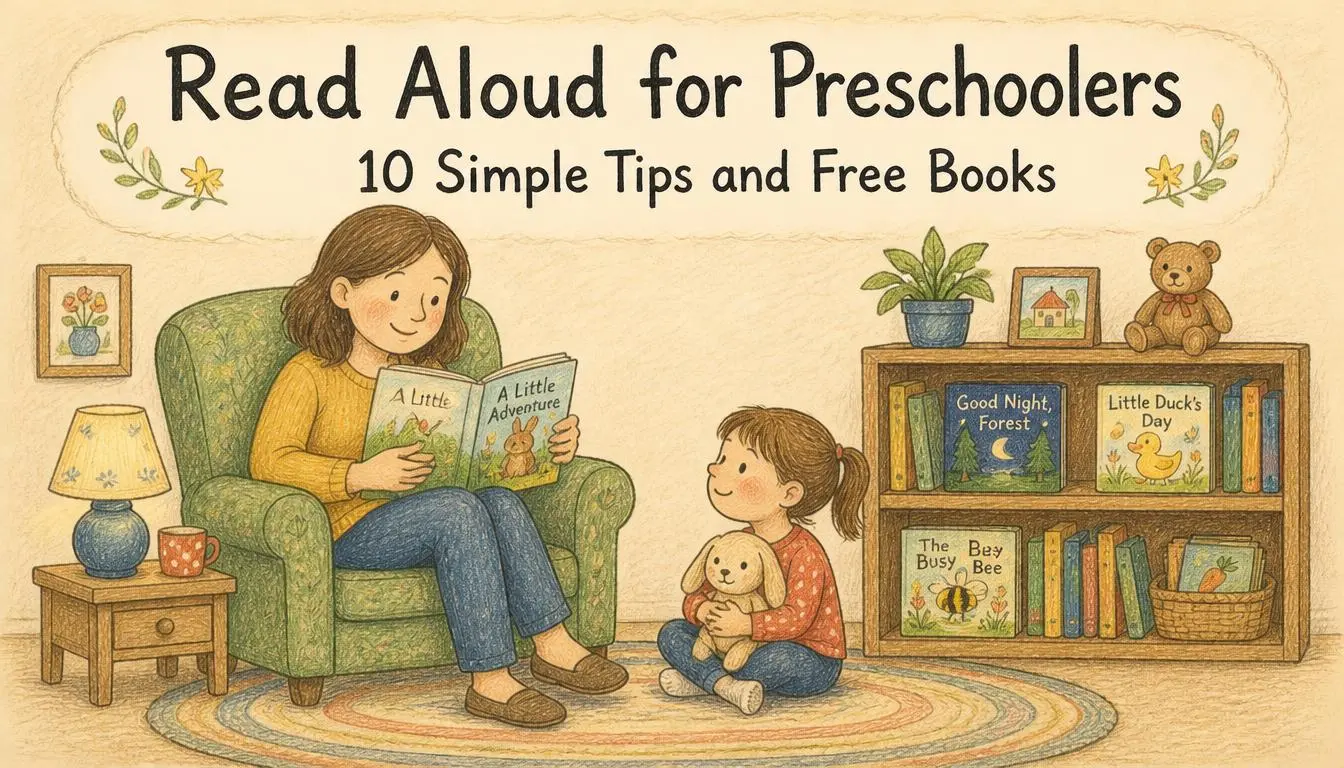
Reading aloud for preschoolers is one of the simplest things a parent can do and one of the most powerful. A few minutes with a picture book gives your child new words, big ideas, a cozy cuddle, and your full attention, all at once. The best part is that you don’t need to be a perfect reader. You only need to show up with a story.
In this guide to read aloud for preschoolers, you’ll learn why reading together matters, 10 simple tips that make story time easier and more fun, and a free picture book from our library to try with each tip.
Why Read Aloud for Preschoolers Matters
Preschoolers are curious, wiggly and full of questions, and that is exactly why read aloud for preschoolers works so well at this age.
- New words. Picture books use richer language than everyday chat, so children hear words they might not hear any other time.
- Listening skills. Following a story from start to finish helps little ones practice paying attention.
- Big feelings, made smaller. Stories let children explore worries, excitement, and friendship in a safe way.
- A love of books. Children who enjoy story time are more likely to enjoy reading later.
- Connection. Those few minutes of cuddling and talking fill your child’s connection tank.
Reading experts agree that daily read aloud for preschoolers make a difference. Reading Rockets shares simple reading tips for parents of preschoolers, including reading every day and happily rereading favorite books. The American Academy of Pediatrics also encourages reading aloud with children from the earliest months, and you can find more parent-friendly guidance at HealthyChildren.org.
10 Simple Tips to Read Aloud for Preschoolers
Each of these read aloud for preschoolers tips comes with a free picture book from our library, so you can try it tonight.
1. Read at the Same Time Every Day
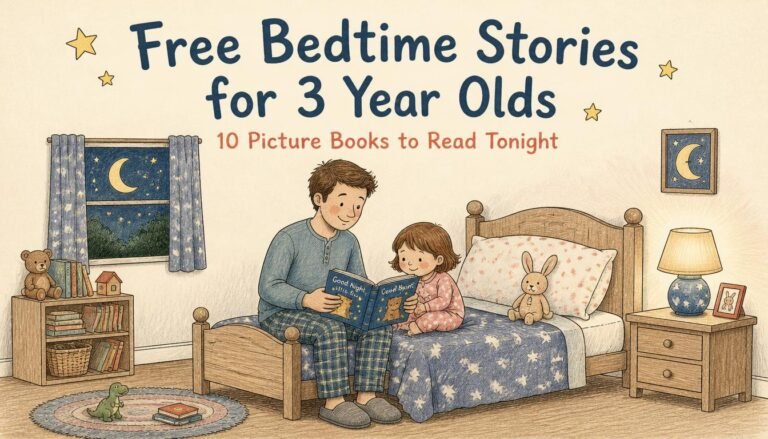
A regular story time gives your child something to look forward to. Many families choose the wind-down before bed, but any calm moment works. When the book comes out at the same time every day, your child learns that story time is a happy, predictable part of the day. For more ideas on calming evening routines, see our guide to free bedtime stories for 3 year olds.
Try it with: Good Night, Little Turtle, a cozy bedtime story about a lovable little turtle who wishes his forest friends good night before drifting off to sleep. Made for ages 2-5.
2. Use Funny Voices
You don’t need acting skills. A squeaky voice for the mouse and a deep, slow voice for the bear make characters come alive and keep preschoolers listening. If your child giggles, you are doing it right.
Try it with Who Pooped on Me? a funny farmyard mystery about a curious little chameleon who meets all kinds of animals while trying to solve one silly question. Every animal is a chance for a new voice.
3. Pause and Ask Questions
Stop now and then and ask, “What do you think will happen next?” Predicting helps children think about the story, and there is no wrong answer. Keep the questions short so the story keeps flowing.
Try it with Bluebell the Little Truck, a story about a small, determined truck who faces big challenges on the road but never stops believing she can make it. Will she? Your child will love guessing.
4. Talk About Feelings
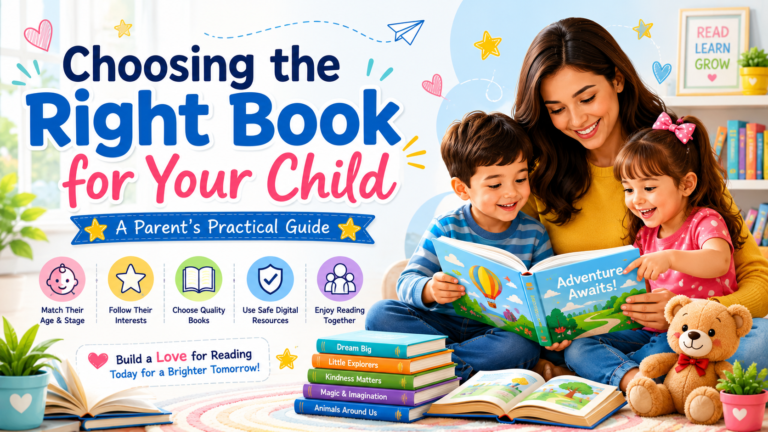
Preschoolers feel everything at full volume, and stories give them the words for it. Ask, “How do you think the character feels?” or “Have you ever felt that way?” For more ideas on feelings stories, see our guide to choosing an emotions book for kids.
Try it with: The Feelings Monsters, a warm picture book for ages 3-5, which introduces six colorful monster friends, each one with a different emotion.
5. Let Your Child Point and Turn the Pages
Let your child hold the book, turn the pages, and point to the pictures. When kids take part, they stay interested longer. Ask them to find a color, an animal, or a favorite character on each page.
Try it with: How the Crayons Saved the Rainbow, a bright picture book for ages 2-6 where the crayons team up to bring the fading rainbow back. Every page has colors to find and point to.
6. Reread Favorites (Again and Again)
If your child asks for the same book for the fortieth night in a row, that is a good sign. Rereading helps preschoolers learn new words, remember the story, and feel safe because they know what comes next. Silly stories are often the ones kids ask for again and again.
Try it with: Stella the Stinky Cat, a funny, heartwarming picture book about a fluffy cat with a hilarious fart problem. Made for ages 3-7.
7. Connect the Story to Real Life
Stories help children get ready for real moments, like the first day of school. Afterward, ask, “Have you ever felt like that?” or “What would you do?” Connecting a story to your child’s own life makes it stick.
Try it with The Butterflies Before School, a first-day-of-school picture book about Amara, whose tummy feels full of butterflies on her first day, with her stuffed fox, Rusty, by her side. Made for ages 4-6.
8. Add Movement
Preschoolers learn best when their bodies join in. Let them act out a scene, hop like an animal, or clap along with a repeated line. A wiggle break in the middle of a story is perfectly okay.
Try it with Time to Tidy, Time to Play, a cheerful story about Zavi, who would rather keep playing than clean up, until Mama turns every toy into a game, one block at a time. Try tidying up together afterward.
9. Talk About Kindness and Values
Stories are a gentle way to talk about being kind, brave, and fair. Ask, “What was kind about what the character did?” instead of explaining the lesson yourself. For more ideas, see our guide to books about kindness for kids.
Try it with The Little Mouse and the Gentle Giant, a heartwarming picture book about kindness, courage, and friendship, with detailed woodland illustrations.
10. End on a Calm, Cozy Note
Finish with a cuddle, a kiss, or a short goodnight phrase. A calm ending tells your child that story time is a safe, happy place and makes it easier to move on to sleep or the next part of the day.
Try it with I Love You to the Moon and Back, a warm picture book about a parent bear and their little cub, celebrating love and security.
How Long Should Story Time Be?
For most preschoolers, 10 to 20 minutes is plenty, and one to three short books is a good goal. Pay attention to your child. If they are squirming or looking around, it is perfectly fine to stop early and try again tomorrow. A short, happy story time is better than a long one that ends in tears.
On very busy days, even one short book counts. Reading for a few minutes every day is more helpful than a long session once a week.
Reading Free Ebooks Together
Our free books are PDFs, which means you can read them on a phone, tablet, or computer. Screens close to bedtime deserve a little care, though. Many pediatric experts, including the American Academy of Pediatrics, suggest switching screens off about an hour before sleep. If you read from a device, these habits help:
- Lower the brightness and turn on a warm night mode.
- Hold the device yourself and read together instead of handing it over.
- Read the main story earlier in the evening, then end with a quiet, screen-free ritual like a lullaby or a cuddle.
Frequently Asked Questions
What is the best age to start reading aloud for preschoolers?
It is never too early or too late. Reading aloud helps babies, toddlers, and preschoolers alike. For ages 3 to 5, look for short stories with bright pictures and a simple plot.
How do I get a wiggly preschooler to sit through a story?
Let them hold the book, act out parts of the story, or sit on your lap with a favorite toy. Choose shorter books and read them in a lively voice. If they wander off, keep reading anyway, because they are often still listening.
Should I read the same book over and over?
Yes. Repetition builds vocabulary, memory, and confidence. Mix favorites with new stories to keep things fresh.
How many books a day should I read?
One to three short books is plenty. Quality matters more than quantity, so choose stories you both enjoy.
Are your books really free?
Yes. Every book in our library is a free PDF with no sign-up needed.
Final Thoughts
Reading aloud for preschoolers doesn’t need to be fancy. A cozy spot, a short story, and your full attention are enough to build new words, new feelings, and a lifelong love of books. Start small, keep it fun, and follow your child’s lead.
Try one tip tonight. Pick one of the free books above, read it in your silliest voice, and see where the story takes you. Looking for more free picture books for preschoolers? Browse our full Kids Library for stories your child will love.