Emotions Book for Kids: Helping Children Understand Big Feelings
A kids emotions book can turn a meltdown into a moment of understanding. Anyone who’s witnessed a toddler go from giggling to sobbing in about ten seconds knows how big feelings can be at this age. Children feel emotions just as strongly as adults, sometimes even more, but without the vocabulary or the coping skills to make sense of what is happening inside them. That space between feeling something big and having no words for it is exactly where a good emotions book for kids deserves its spot on the shelf.
In this guide we will talk about why an emotions book for kids is so important, what makes one really effective, the 5 types to explore, and where you can find free ones to add to your family’s reading rotation.
Why an Emotions Book for Kids Makes Such a Difference
It’s tempting to think kids will “grow out of” big reactions. They do to an extent. Books can help to speed that process along in a gentle way. Here’s the way:
- They give feelings a name. A child who can say “I’m frustrated” instead of melting down has already taken a big step toward managing that feeling. Early childhood experts describe a rich feeling-word vocabulary as essential, because it helps children understand their experiences and talk about them with others. You can read more in this Head Start guide on fostering emotional literacy in young children.
- They normalize every feeling. Many kids learn early that anger, jealousy, or sadness are “bad” feelings that shouldn’t be shown. A good book pushes back on that and shows that all feelings are allowed, even the uncomfortable ones.
- They model what to do with a feeling. The best stories show simple, concrete tools, like taking a breath, asking for a hug, or using words instead of hitting. That gives kids a toolkit they can reach for in real moments.
- They make a parent’s job easier. Reading together creates a shared, low-pressure vocabulary. In a tough moment you can say, “Remember what the bunny did when he felt angry?” instead of inventing calming words on the spot.
- They build empathy. Many books feature several characters feeling different things at once, which helps kids see that other people have an inner world too.
What Makes an Emotions Book for Kids Actually Work
Not every book that mentions feelings helps. A few things separate the ones that stick from the ones that get skimmed once and forgotten.
- Clear, distinct representation of each emotion. The best books give every feeling its own color, character, or visual cue, so a child can point to a page and say, “That’s how I feel.”
- Simple, validating language. Phrases like “it’s okay to feel angry” or “everyone feels scared sometimes” matter more than long explanations. At this age, validation does more work than analysis.
- A gentle coping strategy inside the story. Taking a breath, asking for space, or talking it out gives children a real action to try, not just a vague message to “calm down.”
- Warm, non-judgmental illustrations. Characters who feel angry, sad, or afraid should still look sympathetic and relatable, never scary or shameful.
- A reassuring, non-preachy ending. The character should end up feeling understood and supported, not “fixed” or lectured. That is exactly the response parents hope to give in real life.
5 Types of Emotions Books Worth Exploring
Every emotions book for kids falls into one of a few styles. Knowing which one suits your child makes it easier to choose the right free story.
1. Multi-Character Emotion Guides
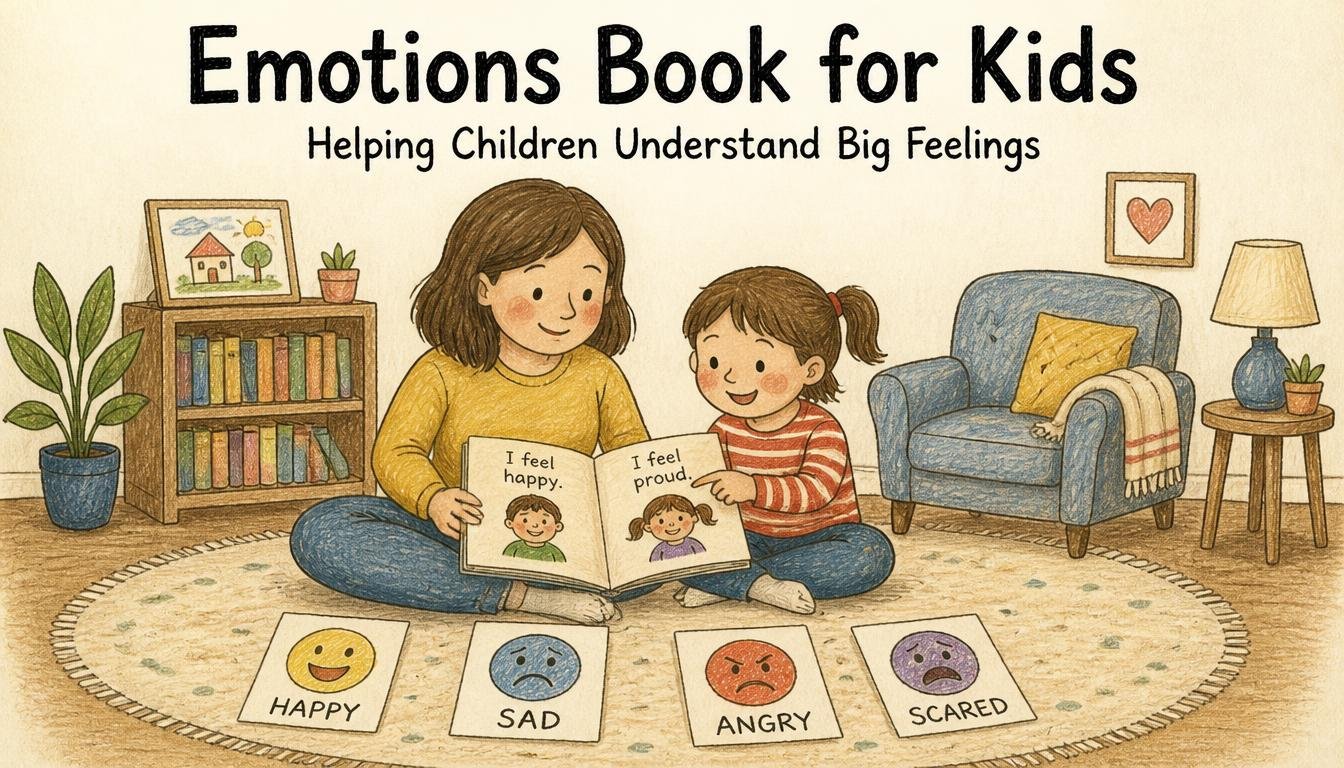
These books introduce several characters, each representing a feeling such as happy, sad, angry, scared, or surprised. This type of emotions book for kids is especially good for building a broad vocabulary all at once.
2. Single-Emotion Deep Dives
Instead of covering every feeling, these stories focus on one emotion, often anger or worry, and explain what it feels like and how to work through it. They help most when your child is struggling with one particular feeling right now.
3. Everyday Scenario Stories
These follow a character through a relatable moment, like a toy being taken away, a scary first day, or a disappointing result. Kids see the feeling and how it is handled in a real situation.
4. Big Feelings, Small Solutions Stories
Here an intense moment is paired with one very simple tool, like counting to five or taking three deep breaths. Children get validation and an action they can use right away.
5. Animal or Character-Led Metaphor Books
Many books use animals or imaginative creatures to represent feelings. This can feel less personal than a human character facing the exact emotion your child is dealing with, which makes it easier to talk about.
How to Use an Emotions Book for Kids Effectively
The right book is only half the equation. How you use it shapes how much it helps.
- Read it before a meltdown, not only during one. A calm moment lets your child absorb the words and strategies without the stress of an active meltdown getting in the way.
- Revisit it right after a hard moment. Once things settle, flip to the page that matches what happened. “This looks like how you felt earlier, right?” connects the story to real life.
- Use the book’s language in the moment. If the story has a favorite phrase or strategy, borrow it. Familiar words land better than new ones a child hasn’t heard before.
- Let your child choose. Ask, “Which feeling do you want to read about today?” Kids who pick the page tend to join the conversation more.
- Model it yourself. Say your own feelings out loud: “I’m a little frustrated, so I’m going to take a breath.” Researchers at Vanderbilt’s Center on the Social and Emotional Foundations for Early Learning also recommend sharing your own feelings and labeling your child’s, as explained in their What Works Brief on labeling emotions.
Frequently Asked Questions
My child understands the book but still has big meltdowns. Is it not working?
Understanding an idea and using it in the heat of the moment are two very different skills, especially for young kids. Repeated reading over time, not a single session, is what slowly builds the ability to use these tools during a real meltdown.
What age is best for an emotions book for kids?
Even toddlers around 18 months to 2 years old can enjoy simple, picture-based feelings books. Stories with more detailed coping strategies tend to land best with preschoolers and early elementary kids, who have more language to process and apply what they learn.
Should I worry if my child connects with only one emotion in the book?
Not at all. It is often a helpful signal. If your child keeps returning to the angry or scared character, that feeling may be worth talking about more directly, since it clearly matches something they are going through.
Can these books replace talking to my child about feelings?
Not entirely, but they make those conversations much easier to start. A book gives you and your child a shared reference point, so an abstract talk about feelings becomes something concrete and approachable.
Where to Find a Free Emotions Book for Kids
This is usually the easy part once you know what to look for. A growing collection of free, warmly illustrated picture books makes it simple to build a small library of feelings stories, from multi-character guides to single-emotion deep dives, without spending anything.
A good place to start is The Feelings Monsters, a free picture book about emotions for ages 3 to 5. It takes only 3 to 5 minutes to read and needs no sign-up, which makes it an easy fit for a busy evening. Having a few free books like this on hand means you are ready with the right story whenever a big feeling shows up, which, with young children, tends to be often.
Signs an Emotions Book for Kids Is Making a Difference
Change rarely happens overnight, but small signs appear over time:
- Your child starts naming feelings without prompting, such as “I’m sad because…” instead of just crying.
- They mention a character from the book during a real emotional moment and may even ask for the book by name after a meltdown.
- They begin noticing feelings in others, like saying a sibling or friend “looks a little angry.” That shows empathy is growing alongside self-awareness.
These signs don’t have to show up constantly. Even occasional moments suggest the words and tools are slowly becoming part of how your child understands their inner world, one page and one feeling at a time.
Final Thoughts
An emotions book for kids does something quietly powerful: it gives children language and tools for enormous feelings long before they can explain them on their own. That groundwork pays off well beyond any single reading, with calmer meltdowns, more open conversations, and a child who learns that every feeling, even the big, messy ones, is allowed.
Start with one free emotions book for kids this week. Notice which character or feeling your child connects with most, and let that guide the next story you pick. Over time, these small moments of naming and understanding feelings add up to a child who feels equipped for whatever big emotion comes next.
Looking for more free, beautifully illustrated stories about feelings and big emotions? Browse our full Kids Library for picture books perfect for every stage of emotional growth.