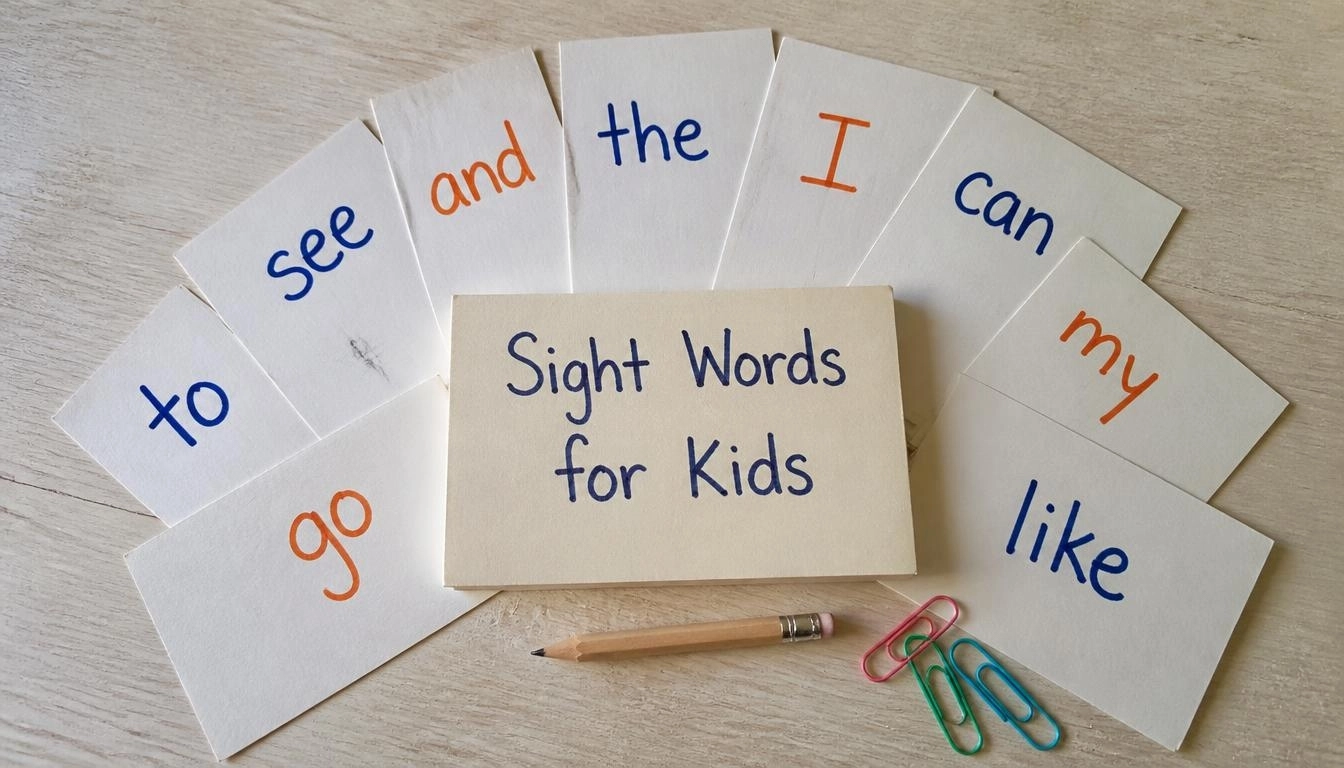
Sight Words for Kids: 10 Fun Ways to Practice at Home
Sight words for kids are the little words that show up on almost every page of a beginner’s book: “the,” “and,” “said,” “you,” and “was.” Children meet them again and again, so the sooner they recognize them, the smoother reading feels.
The good news is that you don’t need worksheets or expensive programs. A few paper cards, some everyday items, and five happy minutes a day are enough to help. In this guide, you’ll learn what sight words are, how to start, and 10 easy games to practice sight words for kids at home.
What Are Sight Words?

Sight words are common words that children learn to recognize instantly, without sounding them out each time. Some are tricky to decode, like “said” or “the.” Others, like “can” or “big,” are easy to sound out but appear so often that it helps to know them quickly.
When a child recognizes these words automatically, reading becomes faster and less tiring. Their attention can go to what the story means instead of struggling with every word.
Why Sight Words Matter (and Why Phonics Still Counts)
Knowing sight words helps children read more smoothly and feel more confident. But sight words work best alongside phonics, not instead of it. Phonics teaches children to sound out new words, while sight words help them zip through the common ones.
Think of it as two tools in the same toolbox. A child who has both can read more words, in more books, and with less frustration.
Dolch vs Fry: Which Sight Word List Should You Use?
You’ll hear about two well-known lists. They overlap a lot, and most schools pick one.
| List | Size | Good to know |
| Dolch | 220 common words plus 95 nouns | Created by Edward Dolch. Grouped by level and popular in the early school years. |
| Fry | 1,000 most common words | Created by Edward Fry. Arranged in groups of 100 by how often words appear. A good next step as reading grows. |
If your child goes to school, ask the teacher which list they use, and follow that one at home. If you’re homeschooling or just starting out, either list works well.
Easy Starter Sight Words
For a first set, choose short, very common words such as:
the, and, a, to, I, you, it, in, is, can, see, we, my, go, look, said
Don’t try to teach them all at once. Pick three to five, and add more slowly.
How to Start Teaching Sight Words for Kids
- Pick three to five words. Small steps work better than long lists.
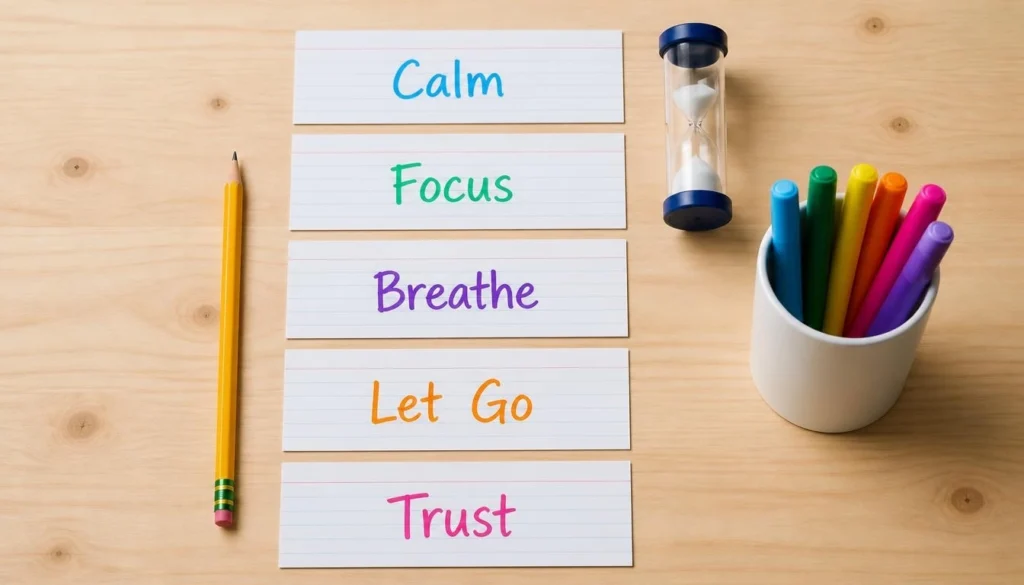
- Write them on cards. Use a thick marker and large letters, one word per card. Let your child help.
- Practice for five to ten minutes. Short, happy sessions work better than long drills.
- Find the words in real books. Seeing them in a story makes them stick.
- Review and celebrate. Mix old words back in often, and cheer for every new word learned.
Sight Words by Age
| Age | What to aim for |
| 3 to 4 years | Enjoy books, learn letters and sounds, and recognize their own name. |
| 4 to 5 years | A few easy starter words, played through games |
| 5 to 7 years | Work through a list steadily and start reading short sentences |
| 7 years and up | Move on to longer lists and use words in reading and writing. |
Every child moves at their own pace. Use this as a gentle guide, not a deadline.
10 Fun Sight Word Games and Activities
1. Flash and race. Hold up a card and let your child say the word as fast as they can. Count how many they get right, then try to beat the score next time.
2. Sight word hide and seek. Hide cards around the room. Your child finds each card, reads it aloud, and brings it back.
3. Sticky note hunt. Write a word on a sticky note and put it on a household item, like a door or a chair. Your child collects the notes and reads each one.

4. Homemade bingo. Draw a grid of nine boxes and write a sight word in each. Call out words, and your child covers them with buttons or small paper squares.
5. Rainbow writing. Write a word in a pencil. Your child traces over it with a different colored crayon each time to make a rainbow word.

6. Playdough words. Roll playdough into thin snakes and shape the letters of a word on a card. It’s hands-on and good for small fingers.
7. Salt tray writing. Pour a thin layer of salt or flour in a tray. Show a word card, then let your child write it with a finger. Shake the tray to start again.

8. Jump the word. Write words on paper sheets and put them on the floor. Call a word, and your child jumps onto the right one. For outdoors, use chalk on the pavement.
9. Build-a-sentence. Write simple words on cards, such as “I,” “see,” “a,” “big,” and “dog.” Your child puts them in order to make a sentence and reads it aloud.
10. Word detective. Choose a picture book and ask your child to find a target word, such as the, on each page. Give them a small paper magnifier for extra fun.
Use Real Books to Practice Sight Words
Books are one of the best ways to practice because children see words in context. Choose short stories with simple, repeated words. Our free picture books online and books for 3 year olds are a good place to begin.
When you read together, point to the words with your finger, pause before a familiar word, and let your child say it. For more tips, see our read aloud tips for preschoolers, or visit the Reading Rockets reading tips for parents.
Common Mistakes to Avoid
- Teaching too many words at once. Three to five at a time is plenty.
- Long drilling sessions. Tired children stop learning. Keep it short and fun.
- Using flashcards only. Games and real books keep children interested.
- Skipping phonics. Sight words and sounding out work together.
- Comparing your child with others. Every reader moves at their own speed.
- Adding pressure. If practice feels like a test, take a break and try again later.
When to Ask for Extra Help
If your child finds it very hard to learn words, even after regular, relaxed practice over several months, talk to their teacher. Some children benefit from extra support, and early help can make a big difference.
Final Thoughts
Learning sight words for kids doesn’t need to be stressful. Pick a few words, play a game, read a story, and cheer for every step. Short, happy sessions will do far more than long drills.
If you’re teaching at home, our guide to online homeschooling has more ideas for building a reading routine. And whenever you want a new story, explore the free books in our kids library.
Frequently Asked Questions
What are sight words for kids?
Sight words are common words that children learn to recognize instantly, such as “the,” “and,” and “said. “Knowing them helps children read more smoothly.
What age should kids start learning sight words?
Many children begin around ages 4 to 5, after they’ve enjoyed books and learned some letters and sounds. Every child is different, so follow your child’s readiness.
What is the difference between Dolch and Fry sight words?
Dolch is a list of 220 common words plus 95 nouns, and Fry is a list of the 1,000 most common words. They overlap, and most schools pick one.
How many sight words should I teach at once?
Three to five new words at a time is a good starting point. Review the old ones often so they stay fresh.
How long should we practice sight words each day?
Five to ten minutes is usually enough for young children. Short, happy sessions work better than long ones.
Do sight words replace phonics?
No. Sight words and phonics work best together. Phonics helps children sound out new words, and sight words help them read the common ones quickly.