The Best Free Adventure Books for Kids
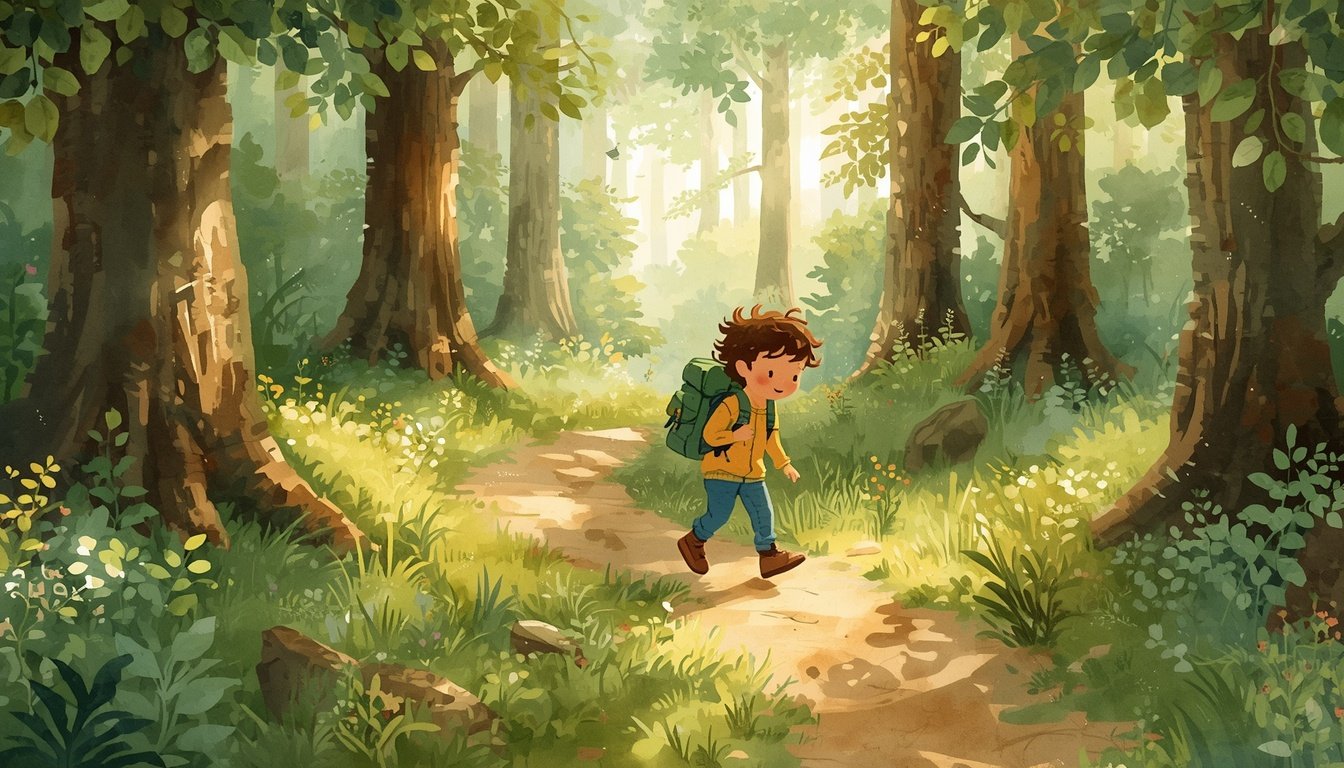
If you’re looking for free adventure books for kids, there’s a certain look kids get when a story turns into an adventure. There’s a look kids get when a story becomes an adventure. Their eyes get a little wider, they lean in closer, and by about page three they stop merely listening and start living it. They are climbing the mountain with the hero. They are creeping through the woods. They’ve heard this story ten times before, they know everybody gets out okay, but they are holding their breath during the scary part.
If you’ve ever seen a kid lost in a story like that, you know why adventure books are such a special part of childhood. And here’s the part that a lot of parents don’t realize until they go looking. You don’t have to spend a single rupee, dollar, or pound to give your child that experience. There’s a huge world of free adventure books for kids out there, most of them beautifully illustrated, and in this guide we’ll explore why these stories are so important, what really makes a good one stand out from a forgettable one, and where to find free options that your child will want to read again and again.
Why Adventure Stories Do More Than Just Entertain
It’s easy to see adventure books as “just for fun,” the popcorn movies of the picture book world. And yes, they are enjoyable. But there’s a lot more happening under the hood.
For example, take courage. When a character has to face something scary, a dark cave, a stormy sea, or a forest full of unknowns and comes out the other side okay, your child gets to feel that fear and relief without any actual danger. Practice. Silent, repeated practice at being brave, in the form of a bedtime story rather than a lecture. Reading regularly with young children is strongly linked to stronger vocabulary and comprehension skills later on, something organizations like Reading Rockets have written about extensively.
Then there’s the imagination part, which may actually be the biggest one. Places and situations kids will never actually see, like a secret kingdom, a talking fox, or an underwater cave system, are often featured in adventure stories. That stretch of imagining something totally outside your own experience is exactly the kind of mental flexibility that later shows up as creative problem-solving, better storytelling, and, honestly, just a more interesting kid to talk to at dinner.
Every adventure story is built the same way without telling you: something goes wrong, the character has to do something about it, and then they change a little by the end. Kids learn that pattern without thinking. It quietly develops their sense of cause and effect long before anyone tells them what a “plot” is.
One more thing to mention, if you have a reluctant reader at home, adventure books are often the thing that works. Kids who are too impatient for slower, quieter stories will likely be hooked by the pace, the stakes, and that itch to know what happens next.
What Actually Makes an Adventure Book Good
Not every book with “adventure” in the title is actually a good fit for young readers. Some genuinely nail it. Others feel flat or scary in the wrong way or are just kind of forgettable. Here’s what tends to separate the two. Knowing this helps a lot when you’re trying to pick free adventure books for kids that actually hold their attention.
People don’t realize how important a relatable hero is. Kids relate to a character who has a little doubt before he acts, not one who is fearless from page one. That little bit of doubt, “I don’t know if I can do this,” and then doing it anyway, is so much more inspiring to a five-year-old than plain, unshakeable confidence could be.
The stakes should be age-appropriate. To a toddler, “danger” might be a bunny who’s lost and trying to find his way home. It can be an abandoned island or a real mystery to solve for an eight-year-old. Get the stakes wrong either way, and you either bore the kid or scare them off the book altogether.
Setting does a lot of heavy lifting too. A jungle, a secret cave, an underwater world, and strong visuals (whether through illustrations or vivid description) enable a child to picture themselves standing right there in the scene. Without it the “adventure” tag doesn’t mean much.
People don’t appreciate endings enough. Kids want to know the hero came through. A twist is okay, even fun, but the story needs to land somewhere that feels completed, not confusing or rushed.
And honestly, the best adventure books manage to slip in themes like courage, friendship, and perseverance without it ever feeling like a lesson. The moral lives inside the excitement. It’s not bolted on at the end with a neat little summary sentence.
Free Adventure Books for Kids, Sorted by Type
Adventure isn’t really one genre; it’s more like a handful of different tastes. Once you discover what your child is attracted to, choosing the right free book becomes a lot easier. Here’s a closer look at the different kinds of free adventure books for kids you’ll come across.
Journey and quest stories
The classic setup is a hero sets out to find something. It could be a lost treasure, a way back home, or the answer to some challenge. They’re especially good for building reading stamina in younger kids, because the “will they make it?” pull keeps pages turning almost on autopilot. This category is often the easiest starting point when you’re building a rotation of free adventure books for kids.
Animal-led adventures
They don’t need a human hero to work, and honestly some of the best free kids’ books do it like this: a brave little fox, a determined mouse, and a curious rabbit heading off through unfamiliar territory. They tend to be a bit gentler and are a great entry point for younger or more sensitive readers that aren’t quite ready for higher-stakes stories.
Exploration and discovery tales
Turn danger into curiosity. A child discovers a secret garden. A character finds a cave no one has ever seen. Nothing bad happens really; the “adventure” is the discovery itself. Good for kids who like the idea of adventure but don’t want anything too intense.
Friendship-powered adventures
Only work because the characters need each other. Usually two or more, each with something different to offer. These subtly reinforce teamwork and cooperation, while the excitement drives the story forward.
Small-but-brave hero stories
They are honestly a personal favorite of mine. Someone small. A tiny mouse. A young child. An overlooked younger sibling. The small one ends up being the one who saves the day. That setup resonates particularly well with young kids, because it mirrors exactly how they might feel in a world made for adults: small, but capable of something big when it counts.
Matching the Book to Your Child’s Age
A lot of the “why won’t my kid finish this book” frustration actually gets solved here. For 2 to 4 years old, short and soft. Big colorful pictures, low stakes, a lost bunny finding his way home rather than anything like a shipwreck. This is the point where adventure should be more of a snug trip than a real danger. Getting this right matters just as much as the story itself when choosing free adventure books for kids.
Kids around ages 4 to 6 can begin to take on some more tension, a scary forest, or a tricky puzzle as long as it is resolved warmly by the end. This is a great chance to introduce animal-driven stories and friendship-powered adventures.
Most early readers are ready for slightly longer stories with a more obvious beginning, middle, and end between the ages of 6 and 8. This is great for quest-style adventures, as kids at this age really like to see a goal through.
And now, for the 8 to 10-year-old, you can start injecting a little more nuance, moral dilemmas, characters who screw up and have to make it right, and adventures that take more than ten pages to resolve.
Small Habits That Make Adventure Story Time Better
The easy part is reading the book. Here are a few things that make it last. This is especially true once you’ve built a small rotation of free adventure books for kids that your family returns to again and again.
Try stopping at a point of tension and asking, “What would you do here? It makes a passive listening experience something your child is actively thinking about with the character.
Speak out. A quiet whisper during the sneaky part. An excited jump in tone right before the big moment. Adventure stories basically ask for it. It is free, and children learn it quickly.
For older kids, after reading, try drawing a rough map of the story’s journey together. It doesn’t have to be pretty or accurate. It just gives them a hands-on way to reprocess the sequence of events.
If it is a story about exploring or camping or something scary, relate it to real life when you can. “Expedition” in the backyard. A blanket fort sleepover. A little safe challenge your child gets to “conquer” in his/her own way.
And perhaps the simplest tip: keep the stack rotating. Adventure stories hold up well under repeat reads, but new titles every week or two are good for keeping excitement from going stale, especially when it’s not costing you anything to add them in.
Where to Actually Find These Books for Free
This is usually the part parents get stuck on when searching for free adventure books for kids. This is usually the part parents get stuck on. Adventure books, especially the well-illustrated ones kids actually gravitate toward, can get expensive fast if you’re buying them one at a time. That’s exactly the gap a free digital library is meant to fill.
More and more free illustrated picture books mean you can read quest stories, animal adventures, and small-hero tales without paying a dime, signing up for anything, or waiting for a delivery. This means that instead of your child reading the same two books over and over again until the spine breaks apart (not that there’s anything wrong with that), you can bring out something new whenever the mood strikes, a rainy afternoon, a bedtime request, or that inevitable “just one more story” moment right when you thought you were done.
A Few Questions Parents Often Ask
My child gets scared easily. Do they still read adventure books?
Sure thing. You just want to err on the softer side of the spectrum. Exploration and discovery stories, or animal adventures with low stakes, give kids the fun of a journey with nothing to keep them up at night. There’s no need to hurry to work your way up to higher-stakes stories later.
What length should an adventure book be for a 3- or 4-year-old?
Smaller than you think. At this age, a book that is five to seven minutes long is usually sufficient. The aim is not some grand epic but a satisfying little journey, with a clear beginning and a happy landing.
What if my child wants to read the same adventure book again and again?
That’s completely normal and, honestly, a good sign. Repetition helps kids feel secure and lets them notice new details each time. Keep that favorite in the rotation, but try to add a new title to it every week or so instead of replacing it outright.
Are free adventure books really good quality, or just a step down from paid ones?
The truth is that quality isn’t in the price tag; it’s in the source. A well-illustrated, well-written free picture book can absolutely hold its own against a paid one. The trick is to look for books that have put some real care into the art and the pacing, not just quantity for quantity’s sake. That’s really the heart of what makes the best free adventure books for kids worth reading in the first place.
Final Thoughts
Free adventure books for kids do more than pass the time. They quietly build courage, stretch imagination, and teach kids what it feels like to push through the hard part of a journey, all the while keeping them utterly hooked on what happens next.
Start this week with just one free adventure book. Observe which flavor your child gravitates towards—quiet exploration, animal-led journeys, or bold quests—and let that inform what you pick next. Give it a month and you’ll probably have a small rotating collection of free adventures your child asks for by name night after night.
Ready to start your child’s next adventure? Browse our full kids’ library for free, beautifully illustrated storybooks perfect for young adventurers.