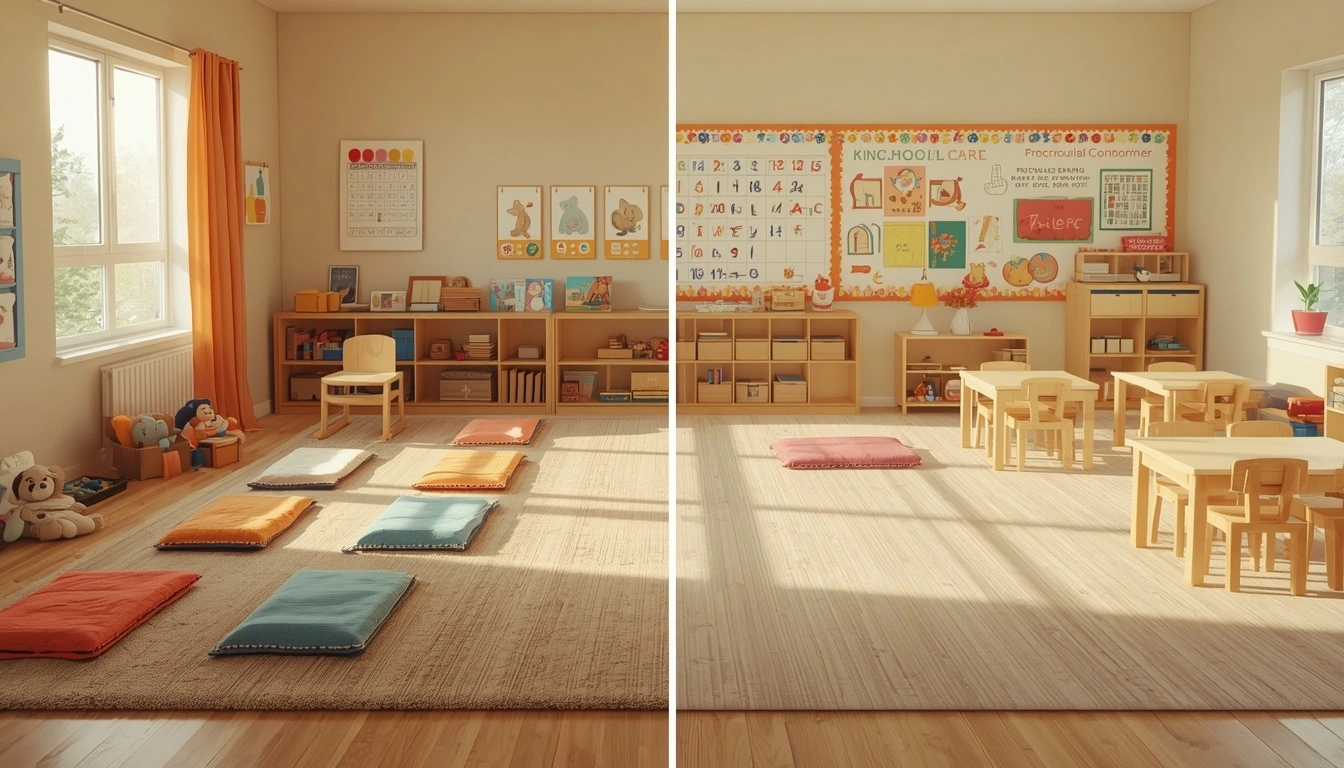
Daycare vs Preschool: 7 Easy Ways to Tell the Difference
Daycare vs preschool: it sounds like a simple choice until you’re standing in a hallway at 7:40 on a Monday morning, holding a coffee in one hand and a tiny shoe in the other, thinking about the tour you booked yesterday. The sign outside said “Learning Center,” the website said “Preschool,” and the brochure said “Child Care.” Are they the same thing?
Not quite. But the line between daycare and preschool is blurrier than most guides admit. This isn’t a ranked list. It’s a short path to help you decide: six questions to start, a plain-words look at what each one is, three example families, and a checklist you can take on a tour. (Terms also change from place to place. Some countries say “nursery,” “kindergarten,” or “playgroup” for programs like these, so check what your area calls them.)
Daycare vs Preschool: Start With Six Questions
Before comparing anything, answer these in your head. Your answers will tell you more than any chart.
- How old is your child? If your child is a baby or a young toddler, a group preschool may not take them yet.
- What hours do you actually need? Count the time between leaving for work and getting home, including travel.
- Do you need care in summer and on school holidays? Or do you have those days covered?
- How important is a learning plan to you? A set curriculum, or mostly play, songs, and snacks?
- How does your child do in groups? Some children thrive around lots of ages, others prefer a smaller, same-age group.
- What can your budget stretch to? Costs vary a lot by place, hours, and program, so look at the total, not just the headline price.
Keep your answers handy. We’ll come back to them.
What Daycare vs Preschool Really Means
Daycare is first and foremost care. It exists so that children are safe, fed, and cared for while their parents work. It usually accepts a wide age range, often from infancy, and it tends to run long days across the whole year. That’s why it fits well with full-time work. Good daycares still include play, songs, and learning, but the core promise is care.
Preschool is first and foremost early learning. It usually serves children from about three to five, and its goal is to help children get ready for kindergarten and school: sharing, listening, recognizing letters, counting, and following routines. Many preschools follow the school calendar, with shorter days and time off for holidays.
The simplest way to remember it: daycare is built around your hours; preschool is built around your child’s learning.
The 7 Differences, in Plain Words
- Age. Daycare usually starts earlier, often from infancy. Preschool generally begins around age three.
- Hours. Daycare tends to offer longer, full-day hours. Preschool is often shorter and part-day, sometimes only a few days a week.
- Calendar. Daycare often runs all year. Preschool often follows the school year, with breaks.
- Main goal. Daycare: safe, caring supervision. Preschool: structured early learning and school readiness.
- Daily rhythm. Daycare typically includes meals, naps, and free play. Preschool often adds circle time, learning centers, and planned activities.
- Staff training. This varies a lot. Requirements depend on where you live and on the program, so ask about qualifications at each place.
- Cost. Prices depend on your area, the hours, and the program type. Always compare the total for the hours you actually need.
Where the Line Blurs
Here’s the part many guides skip: a lot of places are both. Many daycare centers run a preschool program for their three- and four-year-olds, and some preschools offer extended care before and after class. In-home daycares may also offer preschool-style activities, though the mixed ages in one room can mean fewer classic preschool activities.
So the question often isn’t “daycare or preschool?” It’s “what does this particular program actually do all day?”
Daycare vs Preschool: Three Example Families
These are made-up examples to show how the questions work. They’re not real reviews.
The full-time workers. Sam and Priya both work 8 to 5, and their daughter is 18 months old. They need long days, year-round. For them, daycare is the natural fit, and a preschool-style class can come later.
The part-time parent. Leila works mornings and has afternoons free. Her son is four and loves group play. A part-day preschool might suit them well, with afternoons at home for rest and reading.
The “I want both” family. Marcus works full-time, but he wants a learning-focused day for his three-year-old. He finds a daycare with a structured preschool classroom and extended hours. It isn’t a perfect match, but it covers both needs.
Notice that none of these families chose based on a label. They chose based on hours, age, and what their child needs.
Your Tour Checklist for Daycare vs Preschool
Whatever you choose, visit in person if you can, and bring these questions:
- What are the hours, and what happens if I’m late?
- What does a typical day look like, hour by hour?
- How many children are there for each adult?
- What training do the teachers and caregivers have?
- How do you handle a child who’s upset or tired?
- What’s the daily balance between play, learning, and rest?
- How do you share news with parents?
- What happens on holidays and school breaks?
- Can I stay a little while and watch?
Then pay attention to how it feels. Do the adults get down to the children’s level? Are the children busy and relaxed? Trust that instinct alongside the answers.
If You’re Still Stuck
- Try a trial day. Many programs let you visit with your child before committing.
- Pair them. Some parents combine a half-day preschool with other care for the rest of the day.
- Look at your child, not just the brochure. A child who’s a bit shy may do better with a smaller, calmer setting.
- Remember that it’s not forever. Children adapt, and plans can change. Many families switch as their child grows.
For official information on finding licensed care in the US, childcare.gov is a good starting point. If you live elsewhere, check your own government’s child care or early education website.
Whichever You Choose, Keep Learning at Home
Daycare or preschool, the learning that happens at home is just as important. A few minutes of reading together after pickup does more than most parents realize. Our read aloud tips for preschoolers can help you make bedtime stories a daily habit, and our guide to free preschool games online has ideas for short, calm screen time.
A Few Quick Answers
Is preschool the same as daycare? Not exactly. Daycare focuses on care, often with longer hours. Preschool focuses on early learning, often for ages three to five. Many programs blend both.
Which is better for a 3-year-old? It depends on your hours, your budget, and your child. Either can work if the program is warm, safe, and well-run.
Can a child go to both? Yes. Some children attend a part-day preschool and a daycare or care arrangement for the remaining hours.
One Last Thought
There’s no single “right” answer in the daycare vs preschool question, only the one that fits your family’s hours, your child’s age, and your gut feeling after a visit. Start with the six questions, take the checklist on a tour, and give yourself permission to change your mind later. Whatever you choose, a child who is loved, read to, and listened to is already off to a good start.