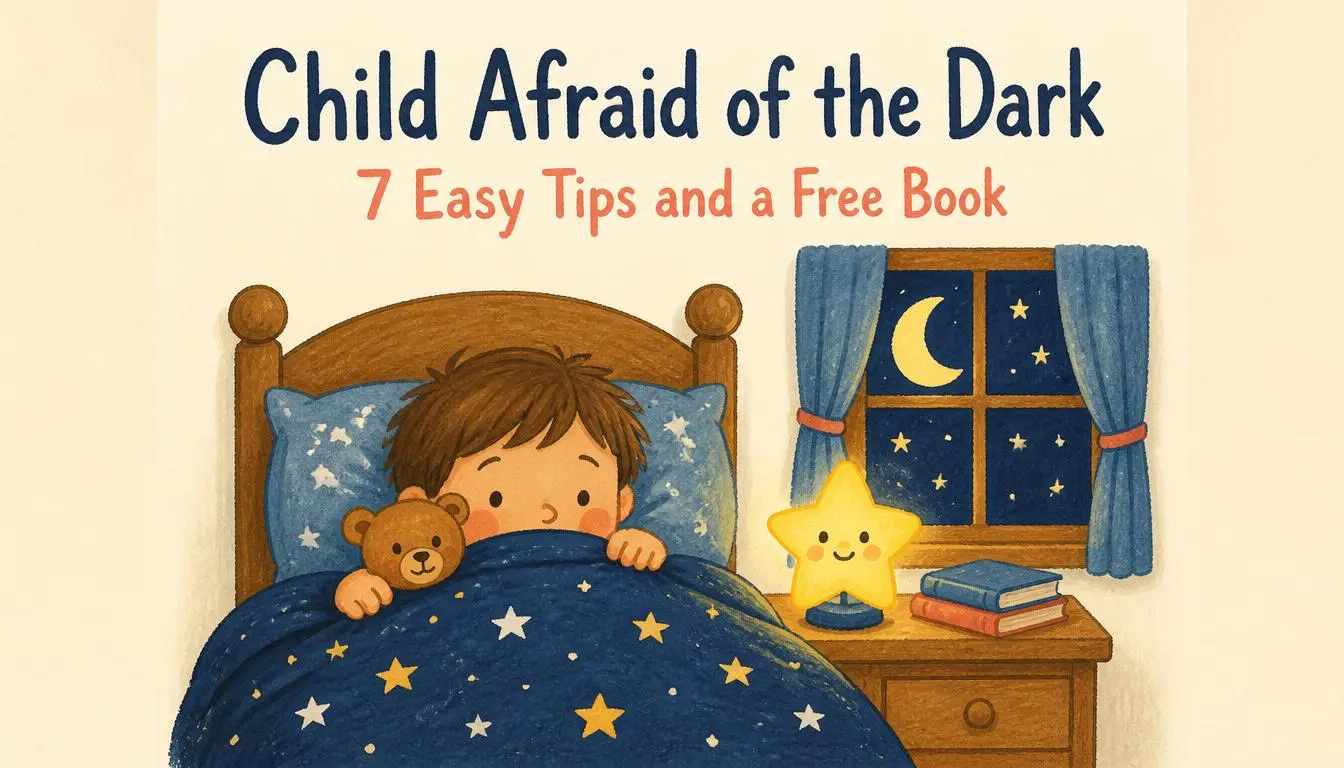
Child Afraid of the Dark: 7 Easy Tips and a Free Book
One of the most common bedtime problems is a child’s fear of the dark, and there is nothing wrong with that. Lights out, shadows grow longer, and suddenly your little one needs a drink of water, a hug, or one more check under the bed. This can be tiring and frustrating for you and your child, but most children learn to feel safe at night with patience and a few simple tools.
In this guide to helping a child afraid of the dark, you’ll discover why the fear happens, 7 easy tips that really help, bedtime stories that make little ones feel brave, and when to ask your pediatrician for support.
Why Is My Child Afraid of the Dark?
A fear of the dark is a normal part of development. Here is what is usually going on:
- Imaginations are growing fast. Toddlers and preschoolers imagine things quickly, but they can’t always tell the difference between pretend and real yet. Shadows can look like monsters.
- It often starts around ages 2 to 3. Many children begin to feel nervous at bedtime around this age, and it can last for years for some.
- The dark is uncertain. Without light, a familiar room can feel strange, and children can’t see what’s around them.
- Something scary may have happened. A frightening show, a spooky story, or a stressful day can make nighttime feel worse.
- Changes can add stress. A new baby, a move, or a new bed can make children feel more nervous at night.
Scholastic explains that nighttime fears often begin when children’s imaginations develop ahead of their ability to tell fantasy from reality and that most fears come and go. You can read more in its guide to 3 ways to overcome nighttime fears.
Is It Normal for a Child Afraid of the Dark?
Yes. A child afraid of the dark is very common, and it is part of healthy growing up. Many children go through it, and it often gets better with comfort, routine, and time. It can make falling asleep harder, though, so a few gentle strategies can help everyone get more rest.
7 Easy Tips to Help a Child Afraid of the Dark
Try the tips that feel right for your child. A little patience goes a long way, and small steps add up.
1. Listen and Name the Fear
Before you fix anything, find out what your child is imagining. Ask open-ended questions like, “Tell me what you think about when the lights go out.” Listening helps your child feel heard, and naming the fear makes it feel smaller. The Cleveland Clinic suggests listening to help your child identify and name their fear in its guide to helping a child afraid of the dark.
2. Acknowledge the Feeling, Without Feeding It
Avoid saying, “There’s nothing to be afraid of!” because it can make your child feel dismissed. Instead, try, “I know the dark feels scary. I am right here, and you are safe.” Acknowledge the feeling, but don’t buy into the monster. Skip long room checks, which can accidentally tell your child that the fear is real.
3. Add a Soft Light
A nightlight or a very dim lamp helps many children feel safe. Let your child choose a nightlight they love, like a star or a moon. Some parents start with a warm lamp and slowly move to a dimmer nightlight over a few weeks. Warm yellow or orange lights tend to feel cozy.
4. Give Your Child Some Control
Children feel braver when they have a say. Let them pick a nightlight, hold a small flashlight or choose a favorite stuffed toy to “guard” the bed. Some families make a “brave spray” from a spray bottle of water and let their child spray it around the room before bed. It is a playful way to feel in charge.
5. Keep a Calm, Predictable Bedtime Routine
A steady routine tells your child that bedtime is safe. Try a warm bath, pajamas, one or two books, a song, and a cuddle, in the same order every night. For cozy ideas, see our guide to free bedtime stories for 3 year olds, and our tips for a smooth toddler bed transition.
6. Make the Dark Fun in the Daytime
Play is one of the best ways to face a fear. Try shadow puppets, a flashlight treasure hunt, or a blanket tent in daylight. When children can play in dim light, the dark starts to feel less strange. Glow-stick games and “follow the leader” through a dim room work well too.
7. Read a Story About It
Stories let children practice a scary feeling safely. When they see a character feel nervous and then feel brave, they feel less alone. We love My Big Kid Bed!, a free picture book that helps toddlers conquer bedtime fears and feel brave about their first big kid bed.
Bedtime Stories for a Child Afraid of the Dark
The right story makes bedtime feel gentler. Here are free picture books from our library to try:
- My Big Kid Bed! helps toddlers conquer bedtime fears and feel brave about their first big kid bed, with warm, hand-illustrated artwork. Made for ages 2-6.
- Good Night, Little Turtle follows a lovable little turtle who wishes his forest friends good night before drifting off to sleep. Made for ages 2-5.
- Goodnight, Little Bunny is a sleepy bunny’s goodnight to the moon, the flowers, and everything around him, with a slow, soothing rhythm. Made for ages 2-5.
- Sleepy Sheep Say Goodnight is a gentle, repetitive bedtime story for toddlers ages 1-3.
- I Love You to the Moon and Back is a warm picture book about a parent bear and their little cub, celebrating love and security.
Easy Daytime Games to Build Brave Feelings
Confidence grows during the day. Try these:
- Shadow puppets. Use a flashlight and your hands to make animals on the wall.
- Flashlight treasure hunt. Hide a stuffed toy and search for it in a dim room.
- Blanket tent. Build a cozy tent and read a story inside.
- Brave breaths. Practice slow breaths together, like blowing out a birthday candle.
- Goodnight to the room. Say goodnight to the lamp, the window, and the moon before bed.
What Not to Do
Even well-meaning habits can make fears last longer. Try to avoid these:
- Dismissing the fear. Saying “don’t be silly” can make your child feel unheard.
- Scary shows before bed. Frightening images can stay with children at night.
- Long searches for monsters. Checking the closet again and again can signal that there is something to find.
- Punishing or shaming. Fear is not misbehavior, so comfort works better than scolding.
- Always giving in to the parents’ bed. Some experts note that moving to your bed may calm the moment but doesn’t help your child learn to cope. A cuddle in their own room is a gentler step.
When to Talk to Your Pediatrician
A child afraid of the dark is usually going through a normal phase. Talk to your child’s doctor if the fear lasts for a long time, gets worse, comes with other big worries, or keeps your child from getting enough sleep. The Cleveland Clinic suggests checking in with a healthcare provider in these cases, and a pediatrician can offer more personal advice.
Reading Free Ebooks at Bedtime
Our free books are PDFs, so you can read them on a phone, tablet, or computer. Screens close to bedtime deserve a little care, though. Many pediatric experts, including the American Academy of Pediatrics, suggest switching screens off about an hour before sleep. If you read from a device, lower the brightness, use a warm night mode, and hold the device yourself. On busy nights, read the main story earlier in the evening and finish with a quiet, screen-free song or cuddle.
Frequently Asked Questions
At what age is a child afraid of the dark most often?
A child afraid of the dark is most common in the toddler and preschool years, often starting around ages 2 to 3. For some children it continues into the school years.
Should I use a nightlight for a child afraid of the dark?
Yes, a nightlight or a very dim lamp can help many children feel safe. Let your child choose the light, and consider a warm yellow or orange glow.
Is it okay to let my child sleep with the light on?
When the fear is at its worst, a light can be a helpful short-term comfort. Over time, many families switch to a dimmer nightlight as their child gets braver.
How long does a fear of the dark last?
Most fears come and go and may feel strongest for a few weeks at a time. Some children carry the fear for longer, and support and routine help.
Are these books really free?
Yes. Every book in our library is a free PDF with no sign-up needed.
Final Thoughts
A child afraid of the dark needs comfort, patience, and a few simple tools, not a lecture. A soft light, a calm routine, and a story about being brave can turn bedtime from scary into cozy. Remember that this phase usually passes, and each calm night helps your child feel a little stronger.
Start tonight: read My Big Kid Bed! Together, let your child choose a nightlight, and say goodnight to the room. Looking for more cozy bedtime reads for a child afraid of the dark? Browse our full Kids Library for free picture books your child will love.