Where Do the Leaves Go in Winter? | A Gentle Autumn Picture Book for Kids Ages 3-6
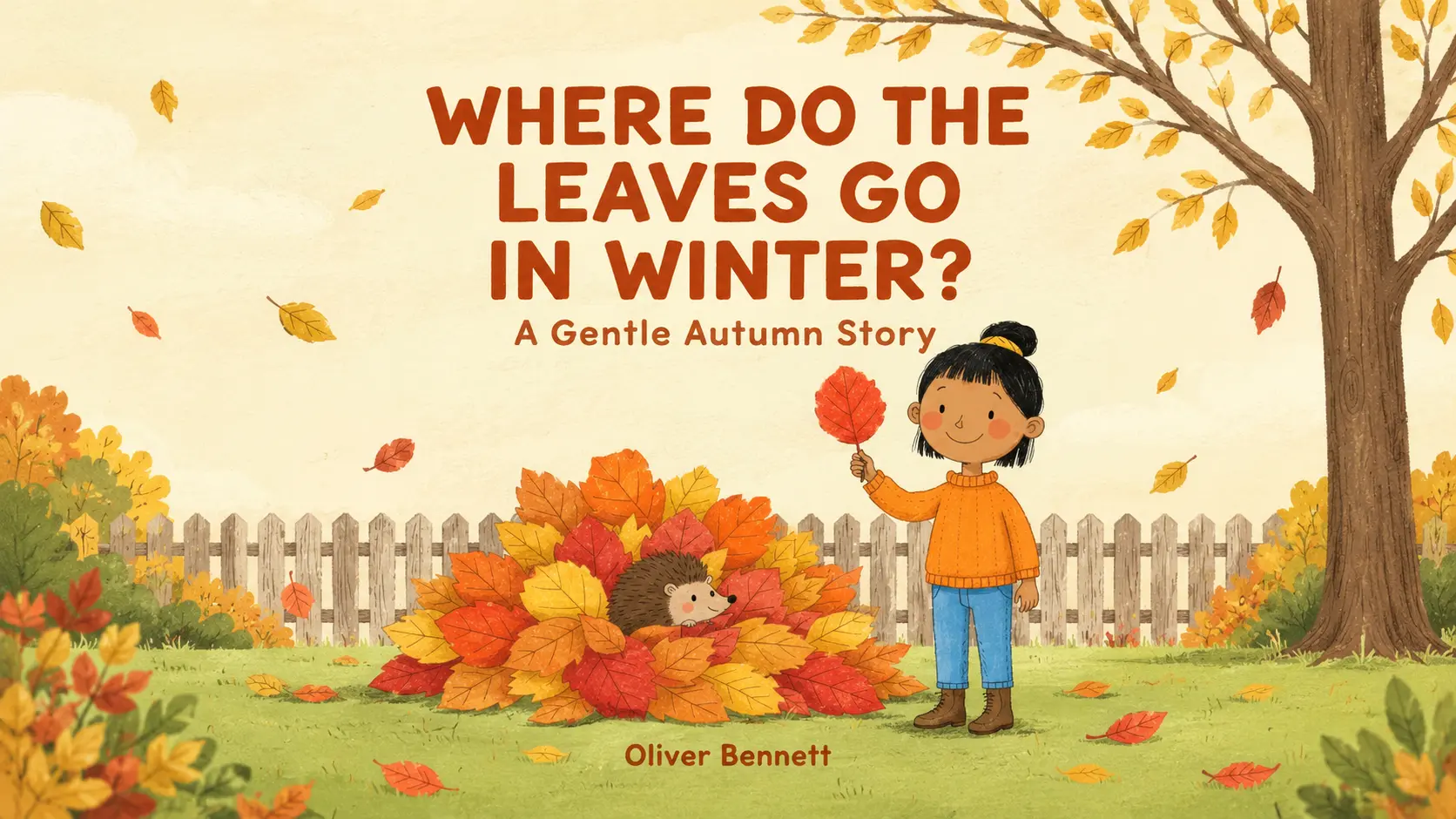
This free autumn picture book for kids answers one of the best questions of this season. “Grandpa, where do the leaves go in winter?” Tala asks, and that is how Where Do the Leaves Go in Winter? begins.
Follow Tala and her grandpa as they chase a red leaf across the garden and discover that the fallen leaves are not gone at all. They are busy, helping hedgehogs, beetles, frogs, garden roots, and even the tree itself. It is a calm, true, and gentle story for ages 3-6, made for reading aloud, and it goes from golden autumn through a snowy winter to bright green spring.
Why This Autumn Picture Book for Kids Is Perfect for Little Naturalists
Children notice everything in autumn: the colors, the crunch under their boots, and the giant piles that are made for jumping in. Then, a few weeks later, the leaves are gone, and a curious child wants to know why. This autumn picture book for kids turns that curiosity into a story with a real answer.
The story keeps it simple. There is one short sentence and one clear picture on every page, so even a three-year-old can follow where the leaves go next. Nothing is rushed and nothing is scary. A grandpa and a granddaughter simply walk through a garden, look closely, and find out together. That is exactly how young children learn best: by seeing, touching, and asking.
Fallen leaves really do shelter small animals, keep plant roots warm, and break down into soil. This is why many wildlife groups, including the National Wildlife Federation and the Xerces Society, encourage families to leave some leaves in the garden instead of bagging them all. The book makes that idea easy to understand for the youngest readers.
What Happens in the Story, Page by Page
Tala and Grandpa begin by raking the red, orange, and yellow leaves into a big pile. Tala looks up and asks the question that drives the whole book: where do the leaves go in winter? “Let’s find out,” says Grandpa. “We will follow the leaves.”
A leaf blows across the garden, and Tala runs after it. It lands beside a little hedgehog’s nest tucked under a hedge. “Leaves make a cozy bed,” whispers Grandpa. Tala tucks a few more leaves around the nest, and the hedgehog curls up inside. Under the same hedge, a beetle and a frog snuggle beneath a leafy blanket.
Next, Tala and Grandpa visit the garden bed. Tala spreads a thick layer of leaves over the sleeping flowers, like a blanket for the roots. Then the rain comes, and the leaves grow soft and brown. Tiny worms nibble them, bit by bit, and Grandpa opens his hand to show Tala the dark, crumbly soil they turn into. “Food for the trees,” he says.
The first snow falls and covers everything like a quilt. Tala stands in front of the tall bare tree and asks a new question: where will its leaves come from? “Wait for spring,” says Grandpa. “The tree is keeping tiny buds safe. ” And one sunny morning, little green buds open on every branch. Tala smiles and says what she has learned: the old leaves go back to the ground and help the new ones grow.
The Real Science Behind the Story
Everything in this book is true, and it is told in a way children can picture. Here is the science behind each page, in case your child asks for more.
Leaves shelter animals. A thick layer of fallen leaves works like a cozy duvet for small creatures. Insects, spiders, frogs, and small mammals use leaf litter to hide from the cold and from hungry birds. Depending on where you live, the nest in the story might belong to a hedgehog, a chipmunk, or a field mouse. The idea is the same: leaves make a safe, warm bed.
Leaves keep roots warm. When you spread leaves over a garden bed, they act like a natural blanket. They help protect the soil and the roots of sleeping plants from freezing and thawing again and again over the winter.
Leaves turn into soil. Rain, worms, tiny bugs, and microscopic fungi slowly break the leaves down. Over months, the leaves turn into dark, crumbly soil full of nutrients. When that soil feeds the tree, a little of last year’s leaves becomes part of this year’s new growth. That is the full circle Tala discovers.
The tree rests in winter. Many trees drop their leaves in autumn to save water and energy during the cold months. But the tree is not empty. It has already formed tiny buds, which stay closed and protected all winter and open in spring when the days grow warmer and longer.
Questions to Ask While You Read
A good read-aloud becomes a conversation. Here are some easy questions for ages 3-6:
- Where did the first leaf land?
- Who is hiding under the hedge?
- Why do you think Tala covers the flowers with leaves?
- What do the little worms do with the leaves?
- What does Grandpa show Tala in his hand?
- What do you see on the tree at the end?
- If you were Tala, where would you follow the leaves next?
There are no wrong answers. The goal is to keep your child looking closely at the pictures and thinking about how the pieces of the story fit together.
Easy Activities to Try After Reading
This story pairs beautifully with real nature time. You do not need special materials, just a few leaves and a bit of curiosity.
- Go on a leaf walk. Collect red, orange, yellow, and brown leaves, then sort them by color and size. Ask your child where each leaf might go next.
- Make a leaf pile for animals. Leave a small pile of leaves in a corner of the garden or balcony. Check it every few days to see who visits.
- Try leaf rubbings. Place a leaf under a sheet of paper and rub a crayon over it to see the veins appear.
- Start a tiny compost jar. Put some leaves, a handful of soil, and a few drops of water in a clear jar, and watch what happens over a few weeks. Ask what the worms and bugs would do.
- Spot the buds. In late winter or early spring, look for small buds on branches and compare them to the buds in the last picture of the book.
- Tuck in the garden. Help spread leaves over a garden bed, just like Tala does.
How to Use This Book in a Classroom or Playgroup
Teachers and playgroup leaders will find this story easy to fit into a seasons or nature unit. It works well as a circle-time read-aloud, because every page has one clear picture that a whole group can see and talk about. You can pause on each page and ask the children to point to the hedgehog, the beetle, or the worms.
It also connects nicely with simple science vocabulary: shelter, roots, soil, seasons, and buds. After reading, children can draw their own version of “Where the Leaves Go” or act out the story in order, from the leaf pile to the new green buds. Because the story covers autumn, winter, and spring, you can read it at the start of a season’s unit and come back to it again in spring.
Warm Hand-Drawn Illustrations on Every Page
With warm, hand-drawn-style illustrations on every page, this free kids ebook moves from a golden autumn garden to a snowy winter yard to a bright spring. The colors are soft and earthy, and the scenes are calm, so there is plenty of space for little eyes to look around. The warm red, orange, and yellow of the leaves are easy to spot, which makes this an autumn picture book for kids that doubles as a gentle color-spotting game.
Perfect for Ages 3-6
Perfect for children ages 3-6, this story works for several kinds of readers. Three-year-olds enjoy the short sentences and the animals to spot. Four- and five-year-olds enjoy following the cause and effect: the leaves fall, the worms nibble, and the soil forms. Early readers in kindergarten can try reading the short sentences aloud themselves.
It is also a lovely story for grandparents to share. The relationship between Tala and her grandpa is warm and patient, and it shows the simple joy of looking at the world together.
Frequently Asked Questions
Is this autumn picture book really free?
Yes. You can read it online on this page and download the free PDF. There is no sign-up needed.
What age is this autumn picture book for kids written for?
It is written for ages 3-6, with short sentences and one clear picture on every page.
Does the story teach real science?
Yes. It gently shows how fallen leaves shelter small animals, keep roots warm and turn into soil, and how trees keep tiny buds safe through winter.
Can I use it in a classroom or at home?
Yes. It works as a bedtime read, a garden-day story, or a circle-time read-aloud for a season or nature unit. You can also print the PDF for personal or classroom use.
A Free Kids Ebook Families Can Trust
As part of our free kids ebook library, Where Do the Leaves Go in Winter? was created to give families a calm, true, and gentle seasons story. There are no quizzes and no pressure, just a child, a grandpa, and a garden full of answers.
If your child is already asking where the leaves go, or you are looking for a gentle autumn picture book for kids to read this season, this story is a lovely place to start. Scroll up to start reading or to download the free PDF, then go outside and follow the leaves yourself.
Looking for more free stories? Browse our full Kids Library for more books your child will love.